About Calochortus nuttallii Torr.
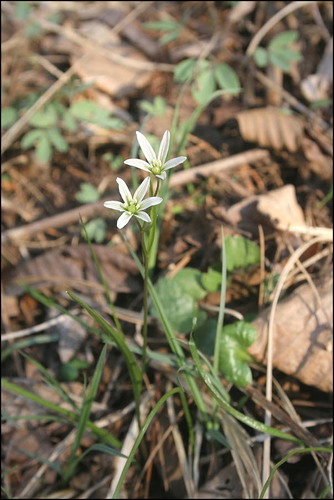
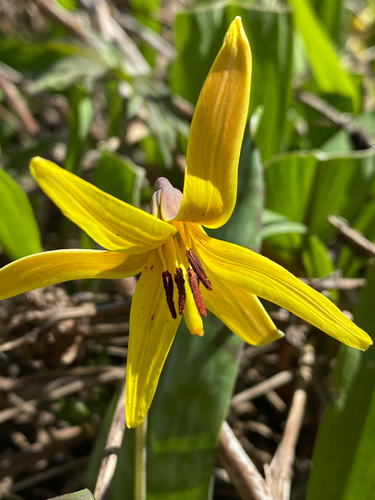
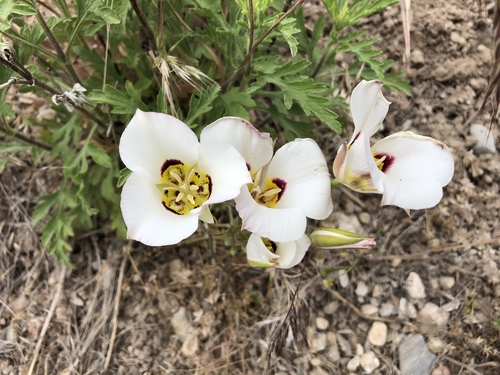
Calochortus nuttallii Torr. typically grows between 15–45 cm (6–18 inches) tall and produces linear leaves. Each plant bears 1 to 4 flowers; every flower has 3 white petals and 3 sepals. The petals are usually tinged with lilac, and occasionally magenta, with a purplish band that radiates out from the flower's yellow base. A distinct form with yellow petals and deep purple bands has been recorded at Petrified Forest National Park. This yellow-petaled form was also spotted during a 2019 "super bloom" in May, near the Orange Cliffs District of Glen Canyon National Recreation Area, on the north side of the Colorado River close to Hite, Utah. This species blooms in early summer, and its flowers can grow up to 3 inches across. This plant is native to multiple western U.S. states. It occurs across the full areas of Utah and Wyoming, across most of eastern Nevada, and in parts of Idaho, Montana, North Dakota, South Dakota, Nebraska, Colorado, Arizona, and New Mexico. It grows on dry, brushy or grassy slopes and in desert high country habitats. Calochortus nuttallii is cultivated as an ornamental plant, valued for its attractive tulip-shaped flowers, and is grown to attract and support native pollinator species. This species is intolerant of excessive water, both during its growing season and while dormant. For healthy growth, it requires well-drained soil that is not excessively sandy with very low organic content. In relatively dry climates, sego lilies can grow well in either full sun or part shade. Plants can be propagated from newly formed bulblets, which take two years to produce flowers. In climates that receive more rainfall than the species' native habitat, extra steps to prevent bulb rot are essential. Writer Claude A. Barr found that placing 8 centimeters or more of gravel no more than 7.5 centimeters underneath the bulbs solved this rot problem.