About Callyspongia crassa (Keller, 1889)
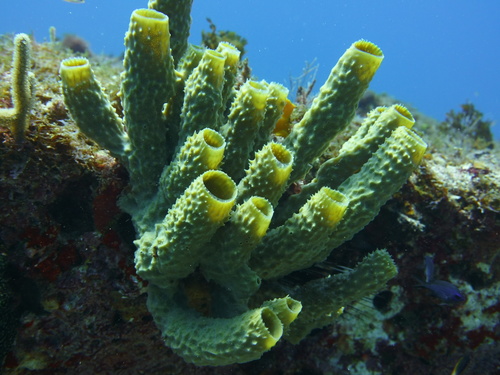
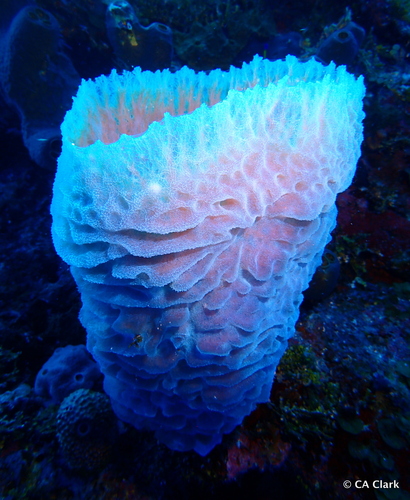
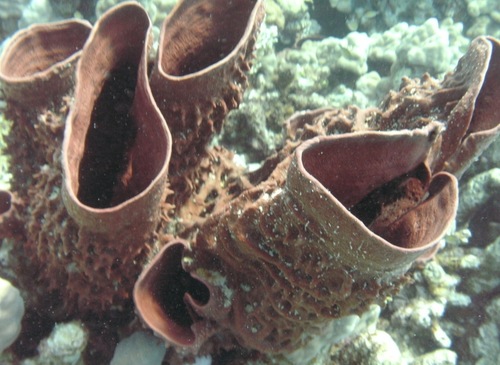
Callyspongia crassa, commonly called the prickly tube-sponge, is a large, flexible sponge that forms tube shapes. Its color is most often brown, but may sometimes be red. Individuals can grow as single tubes or in clustered groups. This species can reach up to 50 centimeters (~20 inches) in size, while very small specimens just 2 mm across have also been found; the typical average diameter of a tube is 30 centimeters (~12 inches). Most of the sponge's surface is covered in spines or spine-like protrusions, which typically become less prominent and taper away toward the upper section of the tube. This sponge species is native to the Red Sea. Recorded specimens have been collected off the coasts of Sudan and Eritrea in the southern Red Sea, and in the Gulf of Aqaba at Eilat in the northern Red Sea. It inhabits marine reef and benthic habitats located relatively close to shore. It can be found at depths between 1 and 30 meters, but is more abundant in the deeper range of 15 to 30 meters. It lives in warm, high-salinity water, where Red Sea temperatures never drop below 21 °C (70 °F). Like other sea sponges, Callyspongia crassa can reproduce both sexually and asexually. Individuals often switch between the two reproductive modes seasonally, to support optimal population growth and colonization of space on the reef. Humans primarily use Callyspongia crassa to develop marine drugs. Many sponge species are used for this purpose because they produce bioactive components, many of which are used to make antiseptic agents. Callyspongia crassa contains more than 20 compounds with anti-inflammatory and anti-microbial properties (along with other active compounds), which support its various medical applications. In its natural ecosystem, sea sponges including this species play important ecological roles. They contribute to nutrient recycling and filter surrounding water, which benefits the reefs they inhabit: clearer water allows more sunlight to reach photosynthesizing organisms living in the same area. Many sponges also provide habitat for a wide range of other organisms, forming microhabitats with conditions that differ from the broader surrounding environment. As a tube sponge, Callyspongia crassa very often hosts small fish and other small inhabitants that live inside its hollow tubes.