About Callospermophilus lateralis (Say, 1823)
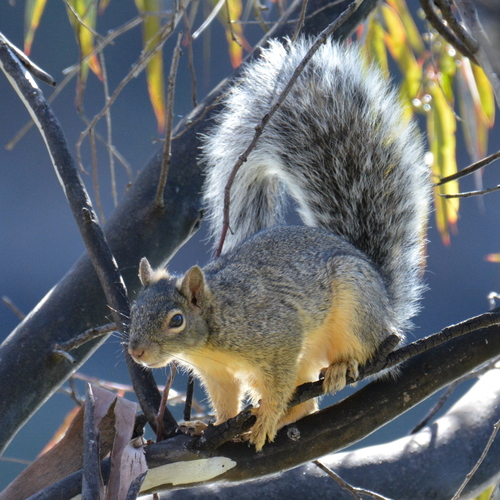
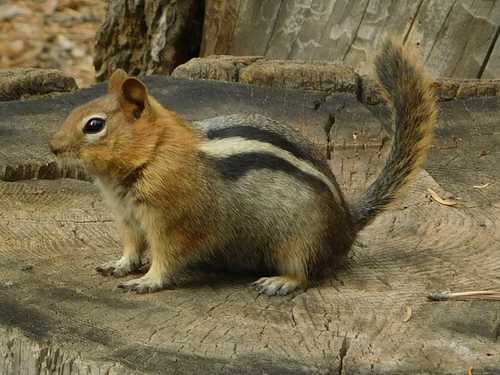
This ground squirrel, Callospermophilus lateralis, generally measures 23 to 29 cm (9.1 to 11.4 in) in total length. Adult individuals weigh between 120 and 394 grams (0.26 to 0.86 lbs). Its underparts are whitish or yellow-gray, while its tail is brown to black with buff edges and a yellowish to reddish underside. It has pale rings surrounding its eyes, and a tawny to reddish 'mantle' across the shoulders, with males showing a deeper reddish tinge than females. This species can be told apart from similar ground squirrels by a black-bordered white stripe running down each side of the back, and can be distinguished from similar-looking chipmunks by its lack of facial stripes. Some authors recognize many subspecies of this taxon. In terms of biology and ecology, this species inhabits forests, chaparral, meadow margins, and sagebrush, particularly favoring areas with abundant rocks or forest litter that provide shelter. It is associated with a variety of coniferous trees, aspen, and manzanita. It is omnivorous, with a diet including pine nuts, acorns, herbs and shrubs, fungi, many types of insects, eggs, young birds, lizards, carrion, and human foods when these are accessible. This species stores food caches near its burrow, most often in late summer and fall. It has also been recorded 'begging' for human food at the wildlife-urban interface. This species hibernates through the winter, and gains extra weight during summer to prepare for this period of inactivity. Their hibernation dens can reach up to 100 feet in total length, though they are typically shallow in depth. The breeding season begins when males and females emerge from hibernation in spring. Most broods are born in July. A single female produces two to eight young per litter, with an average litter size of five. There is no paternal care for the offspring, and juveniles resemble adult individuals by 40 days of age. The maximum recorded life span of this ground squirrel is approximately seven years. Most adults are solitary, rarely cooperate with one another, and typically compete for resources. They may gather at sites with plentiful food, where they develop a group hierarchy. Adults live alone in burrows, where they build nests for hibernation or for rearing young. This species has been documented nesting in human structures such as roofs. When it feels threatened, the species becomes vocal, producing squeaking or growling noises, though it is generally not a very vocal species overall. Predators of this ground squirrel include snakes, foxes, weasels, and bears. It may carry the Rocky Mountain wood tick, which is a vector for Rocky Mountain spotted fever and other diseases.