About Callonetta leucophrys (Vieillot, 1816)
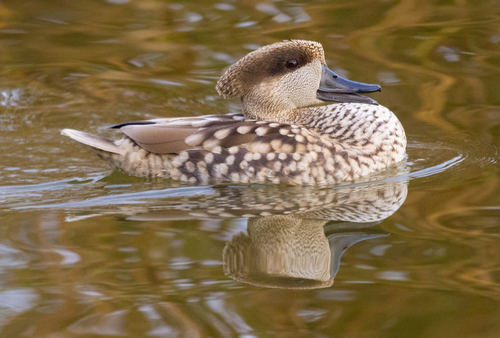
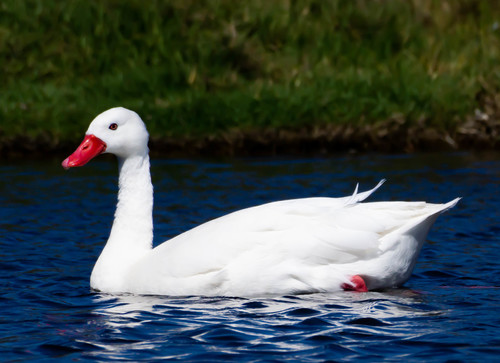
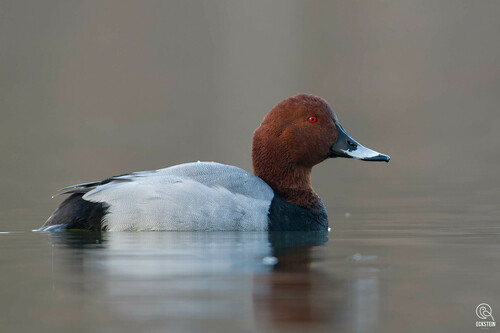
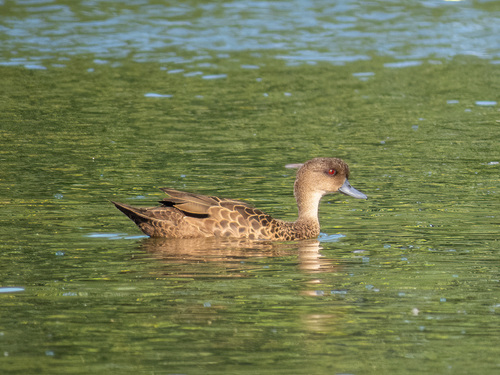
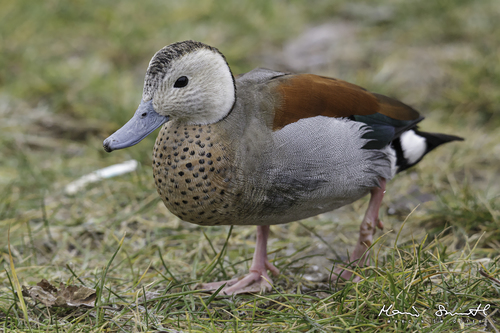
The ringed teal (Callonetta leucophrys) measures 35–38 cm (14–15 in) long, has a 70 cm (28 in) wingspan, and weighs 190–360 g (6.7–12.7 oz). Breeding males (drakes) have a rich chestnut back, pale grey flanks, and a salmon-coloured breast speckled with black; a black band runs from the top of the head down to the nape. Females have an olive-brownish back, a head blotched and streaked with white, and fine pencilled barring across a pale chest and belly. Both males and females have a dark tail, a contrasting pale rump, a distinctive white wing patch, a grey bill, and pink legs and feet. Pairs form bonds easily, and the two sexes have different contact calls: females make a cat-like mee-oowing, while drakes produce a lingering peewoo. This species does not develop an eclipse plumage, so males and females retain their consistent plumage patterns year-round. Ringed teals have webbed toes with long, pointed claws that let them perch on tree branches. Their natural habitats include tropical swampy forests, marshy clearings in well-wooded lowlands, secluded pools, and small streams. As a predominantly aquatic species, ringed teals feed on a variety of aquatic plants, invertebrates, and available seeds. Ringed teals are classified as dabbling ducks rather than diving ducks. Dabblers feed on plant and insect material near the water surface; they may perform "up-ending" where they submerge their head and upper body and tilt their tail upward, but they rarely fully submerge or stay underwater for extended periods like diving ducks. Diving ducks feed on plants, invertebrates, and fish deeper below the water surface.