About Callocephalon fimbriatum (J.Grant, 1803)
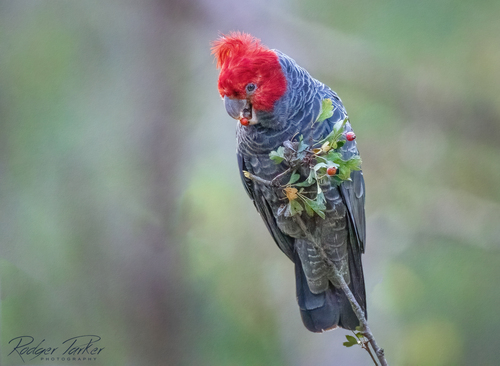
The gang-gang cockatoo, scientific name Callocephalon fimbriatum (J.Grant, 1803), measures 32–37 cm (13–15 in) in length, has a 62–76 cm (24–30 in) wingspan, and weighs 230–334 grams. These are grey birds with wispy crests. In adult males, the head and crest are bright red, while these areas are dark grey in adult females. The edges of the underpart feathers are colored yellow or pink. The edges of the feathers on the upperparts are a slightly paler grey than the rest of the feather, which gives the bird a somewhat barred appearance. Juvenile males can be identified by their brighter crowns and shorter crests; otherwise, they look similar to adult females. Gang-gang cockatoos are not easily confused with other cockatoo species, though they may look similar to Galahs when in flight. They are very social birds, and are not overly noisy. This species is endemic to coastal regions of south-eastern Australia. It once inhabited King Island off the coast of Tasmania, but is now extinct there. It is an introduced species on Kangaroo Island. Gang-gang cockatoos prefer mountain forests and woodlands with dense shrub understories. They make short-distance migrations to more open habitats in winter, but must return to denser forests to breed, because they require tall trees to build their nests.