About Callithrix penicillata (É.Geoffroy Saint-Hilaire, 1812)
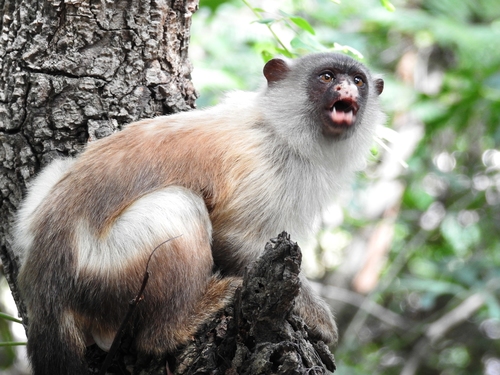
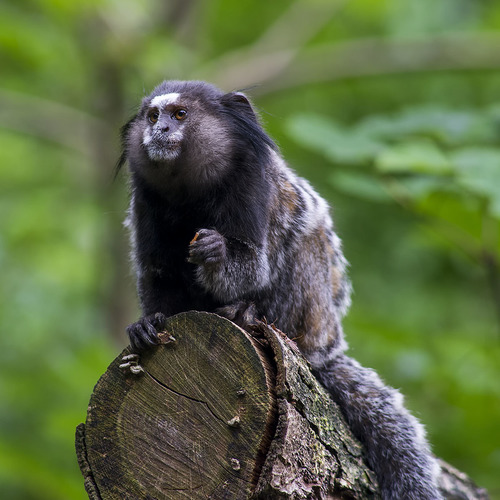
The black-tufted marmoset, with the scientific name Callithrix penicillata (É.Geoffroy Saint-Hilaire, 1812), can be identified by key physical traits. It has characteristic black tufts of hair around its ears, usually sparse white hairs on its face, a typically brown or black head, gray limbs, upper body, and abdomen, and normally black rump and underside. Its tail has alternating black and white rings; the tail is not prehensile and is used only for balance. This species does not have an opposable thumb, and its nails have a claw-like shape. Adult black-tufted marmosets measure between 19.0 and 22.1 centimetres (7.48–8.7 inches) in length, and can weigh up to 350 grams (12.35 ounces).
Black-tufted marmosets are monogamous and live in family groups. They reproduce twice each year, giving birth to 1 to 4 offspring per breeding event, though twins are the most common outcome. Their gestation period lasts 150 days, and offspring are weaned 8 weeks after birth. This species shows high parental investment: both parents, alongside older juvenile group members, help raise the young. Offspring are highly dependent on their parents. While they reach sexual maturity at 18 months old, they usually do not mate until later, and remain with their family group until they are ready to mate.
The diet of the black-tufted marmoset is made up primarily of tree sap, which they harvest by gnawing bark with their long lower incisors. During droughts, they add fruit and insects to their diet. During severe droughts, they have also been recorded eating small arthropods, molluscs, bird eggs, baby birds, and small vertebrates. The main predators of black-tufted marmosets are large birds of prey; snakes and wild cats are also a threat to them. Black-tufted marmosets only use two anti-predator strategies: making predator-specific vocalizations and scanning the environment visually for threats.