About Calliteara horsfieldii (Saunders, 1851)
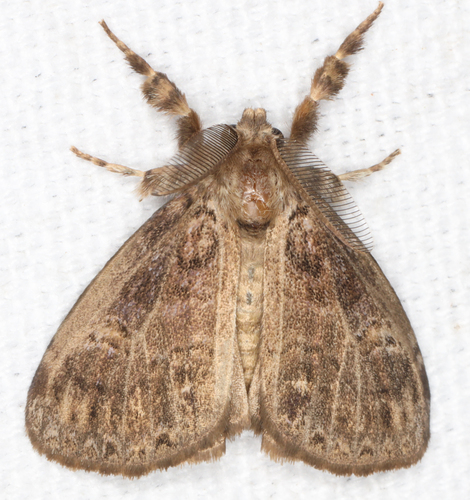
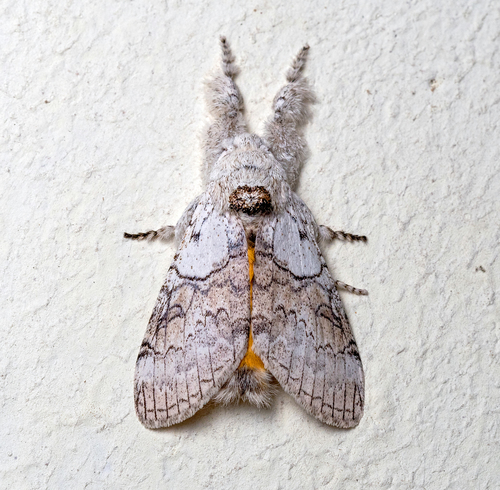
Calliteara horsfieldii (Saunders, 1851) has two distinct color forms among males. The first form has uniformly greyish forewings, while the second form has darker greyish coloration on the antemedial portion of the forewings. The antemedial side of the forewing is strongly curved. Females of this species have whitish forewings with faint markings. Hindwings look similar in both sexes, and both have a yellowish tinge. The caterpillar of Calliteara horsfieldii is yellowish, with rows of dorsal brushes. As larvae, these moths feed on a wide range of host plants, including Etlingera elatior, Anacardium occidentale (cashew tree), Mangifera species, Casuarina species, Begonia, Bixa orellana, Brassica species, Albizia falcataria, Dipterocarpus species, Hopea species, Camellia sinensis (tea plant), Shorea species, Acacia richii, Acacia mangium, Cassia fistula, Casuarina equisetifolia, Cinnamomum zeylanicum (cinnamon tree), Cocos nucifera (coconut palm), Erythrina species, Pterocarpus species, Tamarindus (tamarind), Lagerstroemia (crape myrtle), Ficus species, Eucalyptus species, Eugenia species, Psidium species, Syzygium species, Pinus (pine) and Rosa (rose). This species occurs in the tropical regions of southern and southeastern Asia, including Sri Lanka, Thailand, Singapore, Malaysia, Sundaland, Sulawesi, and Bali, with a range extending toward New Guinea and Brunei.