About Callisia fragrans (Lindl.) Woodson
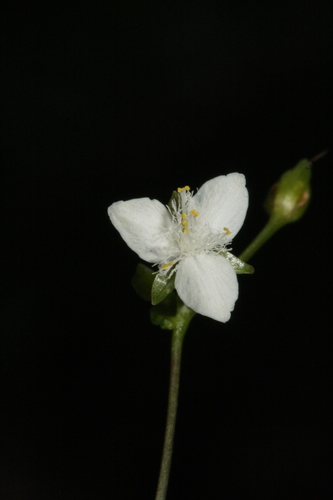
Callisia fragrans (Lindl.) Woodson is a robust, perennial herbaceous plant. Its fleshy stem can reach 1.5 m (4.9 ft) in height. Its leaves grow up to 25 cm (9.8 in) long, and turn burgundy-violet when exposed to prolonged sunlight, a reaction known as "sun-stressing". Flowering shoots of this species are vigorous, bromeliad-like, covered in almost rosette-like leaves, and sparsely branched. Long, fairly slender distichous stolons grow from the lower nodes. The leaves on flowering shoots can reach up to 30 centimeters long and 7 centimeters wide. These leaves are bright light green, narrowly elliptic-lanceolate, pointed, almost stem-clasping, and usually glabrous. Callisia fragrans is endemic to Mexico, where it occurs from Tamaulipas to Yucatán. It is also naturalized in the West Indies, scattered locations in the United States, and a small number of other areas. It has been cultivated as an indoor ornamental in many countries since the early 1900s, and can also be grown outdoors in warmer climates in moist, fertile soil. This species prefers partially shaded growing areas. It has a long-standing traditional reputation in Mexico as an antiviral and antimicrobial plant. In Eastern Europe, its leaves are used to treat various skin diseases, burns, and joint disorders. In vitro studies show that an ethanol leaf extract (tincture) of Callisia fragrans effectively inhibits infection of Vero cells by HSV-1, HSV-2, and an ACV-resistant strain of HSV-2. Unlike the ethanol extract, aquatic extract is effective against VZV, while the ethanol extract itself is not. Although the ethanol leaf extract has a lower selectivity index (measuring toxicity versus effectiveness) than ACV, it is able to inhibit the ACV-resistant HSV-2 mutant, and may be less toxic than ACV. Its antiviral activity appears to work through direct interaction with viruses, blocking their access to host cells.