About Callisaurus draconoides Blainville, 1835
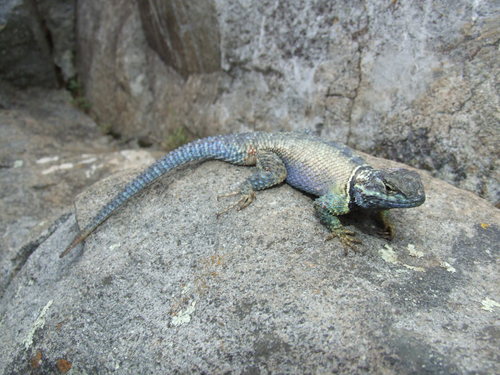
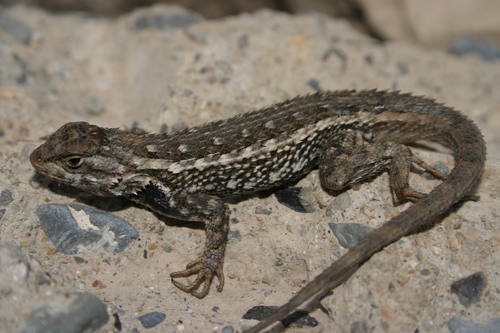
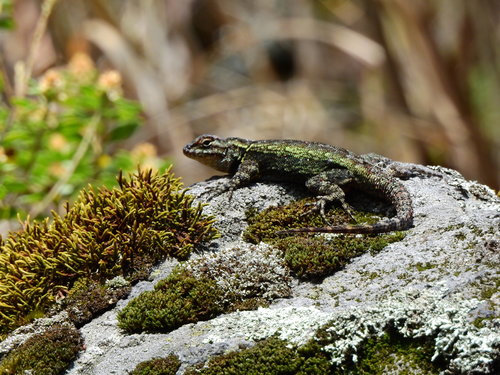
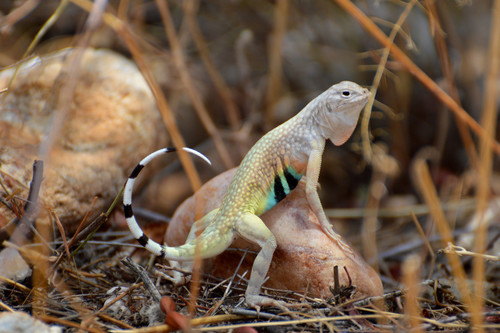
Zebra-tailed lizards (Callisaurus draconoides Blainville, 1835) range from 2.5 to 4 inches (64 to 102 mm) in snout-to-vent length (SVL). Their base body color is grey to sandy brown, and they usually have a series of paired dark gray spots running down the back, which become black crossbands on the tail. The underside of the tail is white with black crossbars. Males have a pair of black blotches on their sides, which extend to blue patches on their bellies. Females have no blue belly patches, and their black side bars are either faint or completely absent. Zebra-tailed lizards live in open desert areas with hard-packed soil, scattered vegetation, and scattered rocks, most commonly on flats, in washes, and on plains. They are common and widely distributed throughout the Southwestern United States, with a range that extends from the Mojave and Colorado deserts north into the southern Great Basin. During summer, zebra-tailed lizards typically lay clutches of two to eight eggs, which hatch between July and November. A single female can lay more than one clutch in a single breeding season. Eggs are thought to be laid in friable, sandy soil. Since they are a prey species for many animals, including birds, other lizards, and mammals, they have a fairly high reproductive rate.