About Calliphora vicina Robineau-Desvoidy, 1830
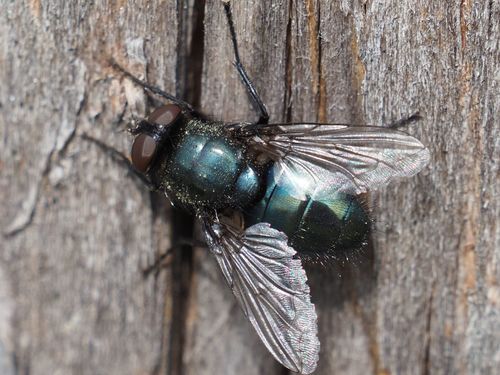
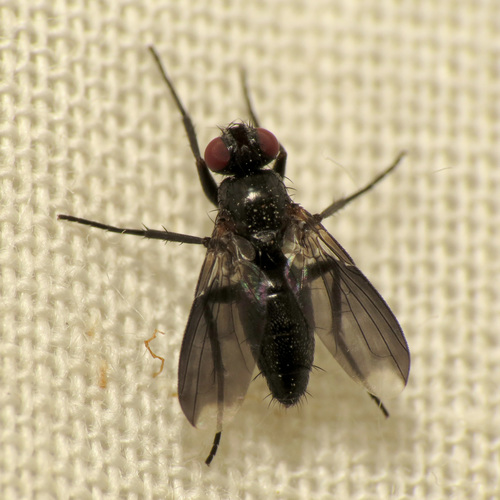
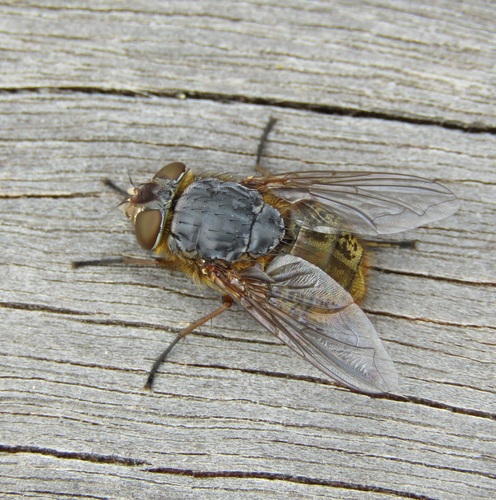
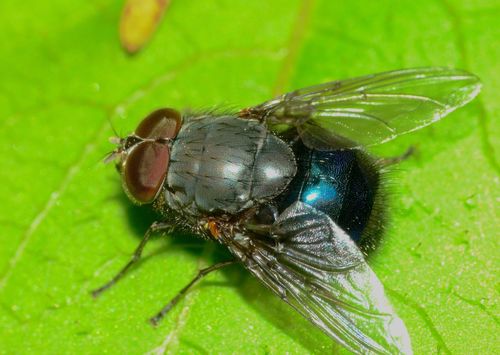
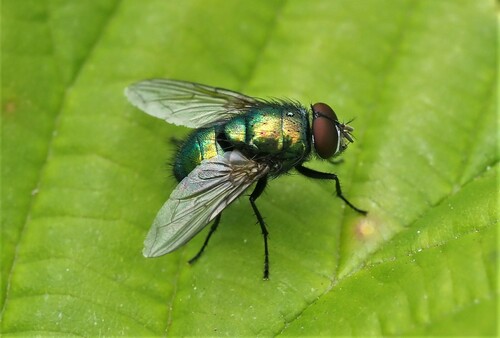
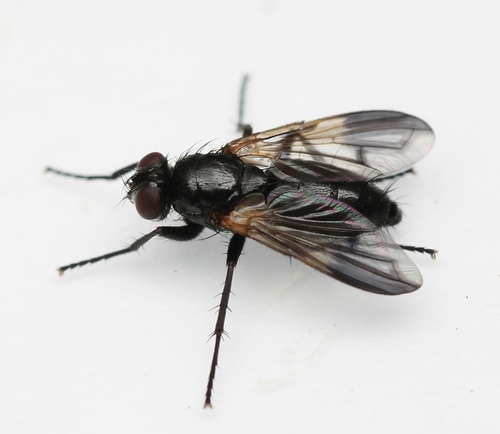
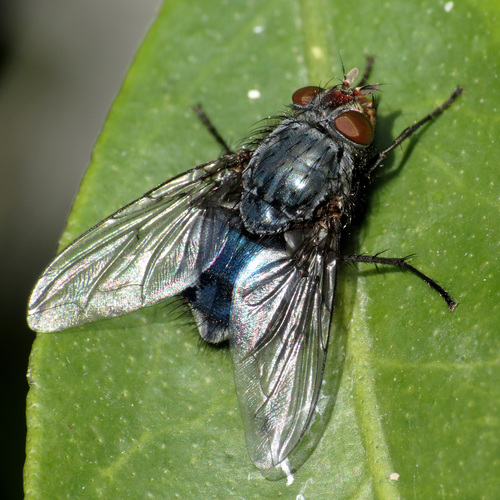
Calliphora vicina is commonly called the blue bottle fly, named for the metallic blue-gray coloration of its thorax and abdomen. It can be told apart from the well-known species C. vomitoria by its bright orange cheeks. Adult blue bottle flies of this species measure approximately 10–11 mm in length, and the sclerites at the base of the coxa are yellow or orange. In the study of bristle arrangement called chaetotaxy, calliphorid flies are characterized by black bristles on the meron, and two to three bristles on the notopleuron. The close similarities between different species in the genus Calliphora make identifying their immature stages nearly impossible. From the first instar larval stage through to the pupa stage, C. vicina is identical to C. vomitoria. C. vicina is found throughout urban areas of the United States, and is most abundant in early spring and fall when temperatures are around 55–75 °F (13–24 °C). The species is predominant in Europe and the New World, but has spread to other countries through harbors and airports. It was first recorded in South Africa in 1965, when a specimen was collected near Johannesburg; few and sporadic specimen collections have been made there since then. It also occurs as an introduced exotic species in Australia and New Zealand.