About Calliostoma ornatum (Lamarck, 1822)
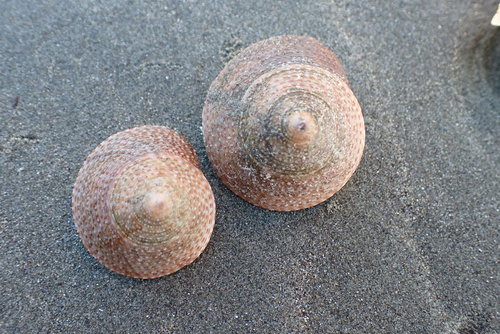
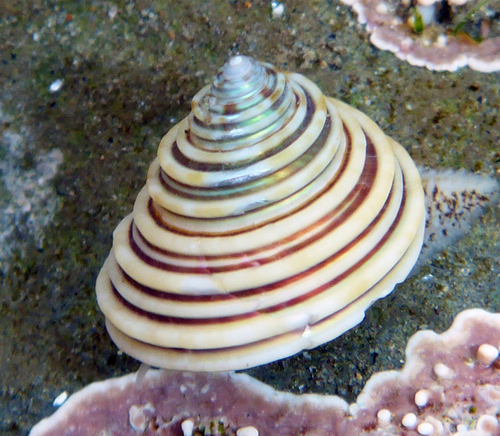
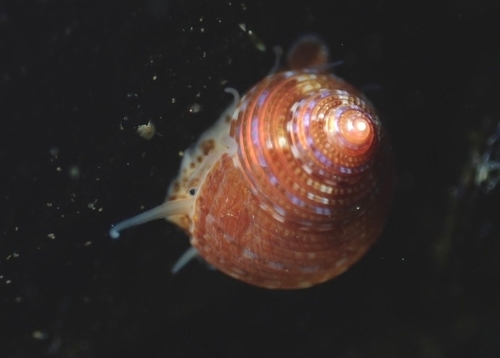
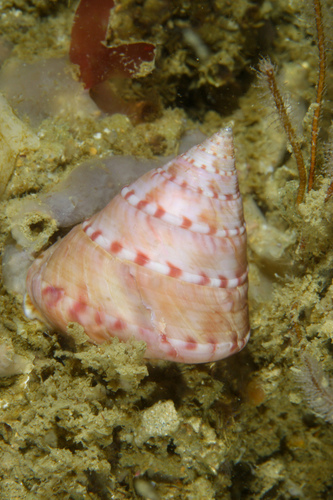
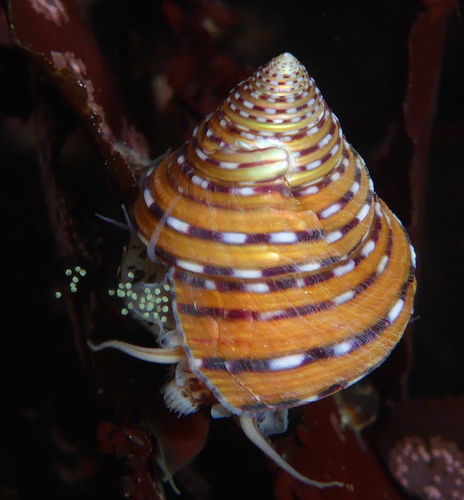
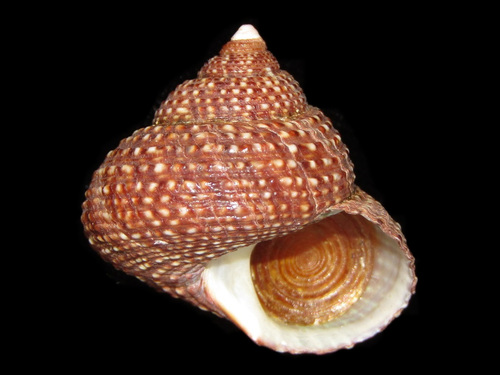
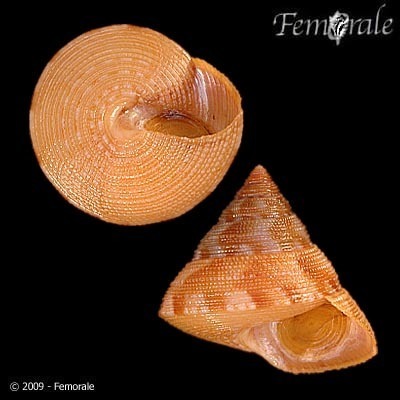
This species, Calliostoma ornatum (Lamarck, 1822), commonly called the ornate topshell, has a shell that reaches a maximum height of 20 mm. The shell has a conical shape, is imperforate, and is rather solid but not thick. Shell color can range from brown, orange-red, or brilliant violet to pale yellowish, with radiating brown patterns (called flames) on the upper portion. The base of the shell is marked with scattered brown and whitish dots. While variable overall, the shell sculpture has consistent defining features. The surface of each whorl is surrounded by spiral lirae of uneven sizes, which are divided into very close, compressed granules. There are around 10 of these lirae on the penultimate whorl, though the total number varies based on how developed interstitial riblets are. The base of the shell has 10 to 13 concentric riblets, which tend to split or become double, and are wider than the interstitial furrows between them. The spire is an elevated cone, with an acute apex. Sutures between whorls are slightly impressed. The shell has seven slightly convex whorls. There are typically two or three stronger lirae near the middle or periphery of the body whorl, which sometimes gives the body whorl a slightly bicarinate outline. The base of the shell is flattened and slightly convex. The aperture is subrhomboidal and smooth on the inside. The arcuate columella is often bordered by a purple streak. The soft body has an orange foot, and distinct black eye spots are located at the base of the paired tentacles. This snail is found exclusively along the South African coast, from the Cape Peninsula to Port Alfred. It occurs from the low intertidal zone down to at least 35 meters below water, and is endemic to this region.