About Calliostoma annulatum (Lightfoot), 1786
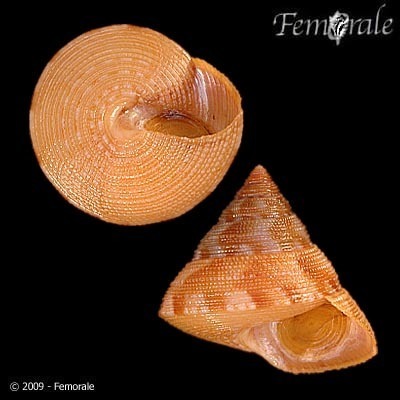
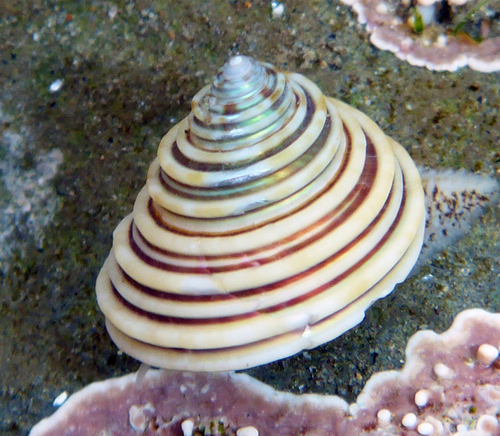
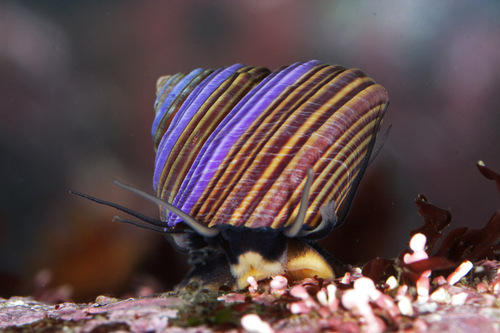
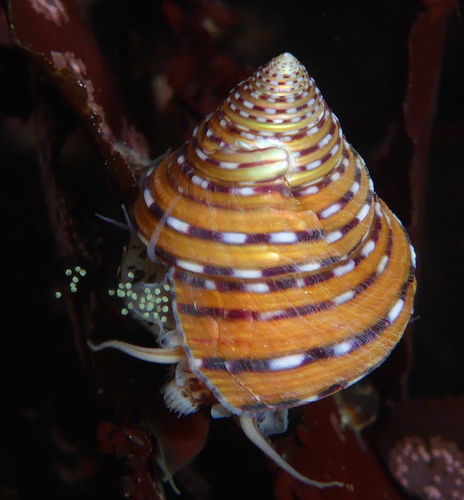
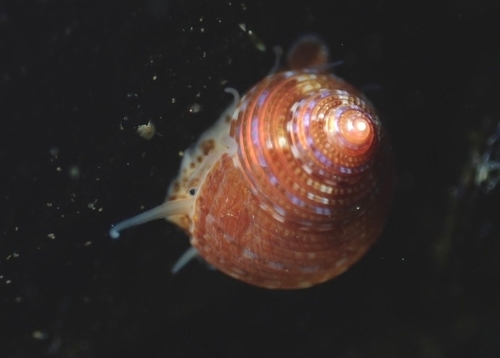
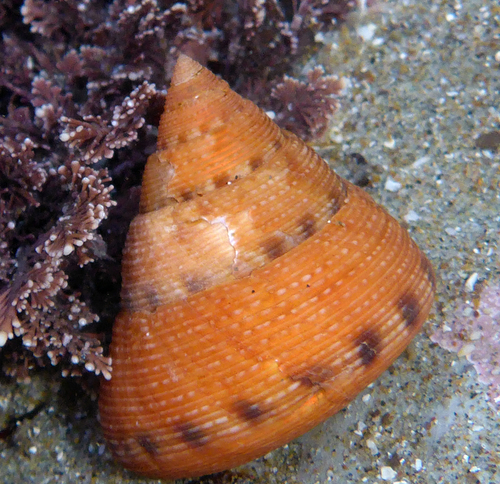
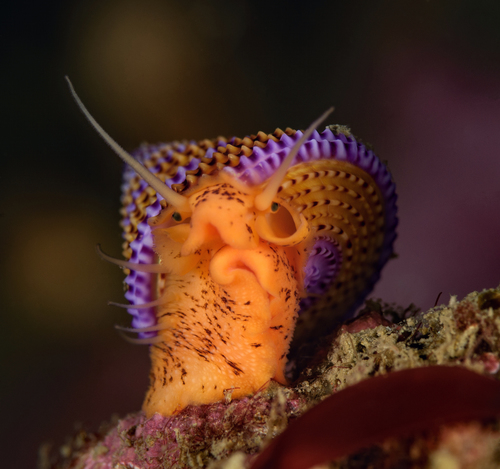
The shell of Calliostoma annulatum ranges in height from 16 mm to 35 mm. It is an elevated-conic, imperforate, relatively thin shell. This species is set apart by its brilliantly colored, lustrous shell: the base color is gold, with brown dots arranged along spiral rows of grain-like structures. The periphery (lower edge) of each whorl is encircled by a zone of violet or magenta stripes, and the axis of the shell is surrounded by a band of this same violet or magenta color. The brilliance of the shell's colors fades somewhat after the animal dies. The thin shell bears numerous granulose spiral riblets: there are about 7 riblets on the penultimate whorl, and 9 or 10 on the base of the shell. Few or no interstitial lirulae are present. The apex is acute, reddish, and very small. Sutures are slightly impressed. The shell has around 9 slightly convex whorls; the final whorl is angular at the periphery and flattened beneath. The aperture is rhomboidal, oblique, and fluted on the inside. There is no umbilicus. The animal's head and foot are yellow-orange with brown spots, and the shell is primarily gold with purple stripes. This top shell occurs in the littoral zone, ranging from Isla San Geronimo, Baja California, north to Forrester Island, Alaska.