About Callinectes similis Williams, 1966
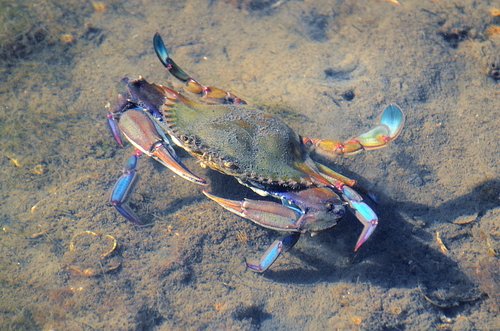
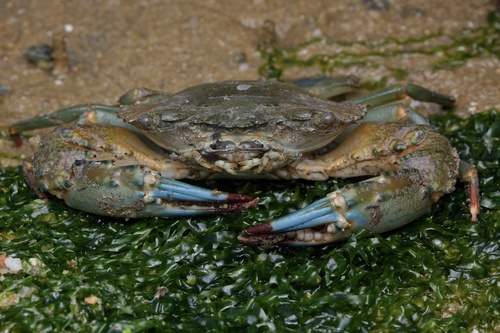
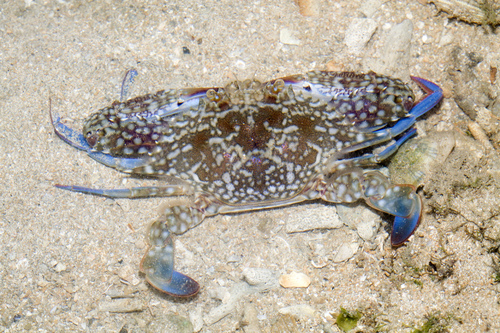
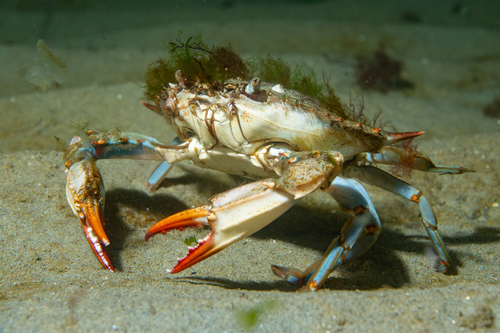
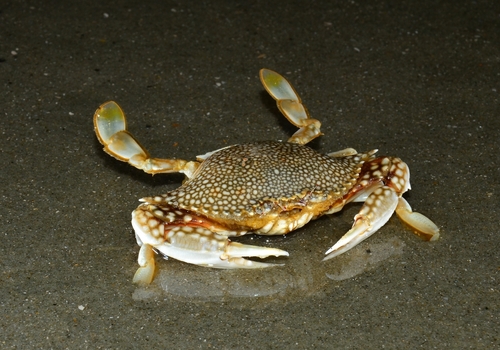
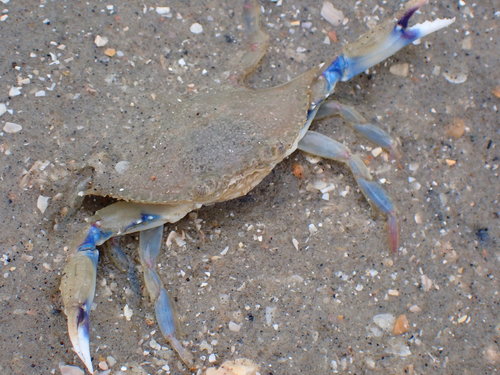
Callinectes similis Williams, 1966 is an adept swimmer; its last pereiopods are expanded into paddle-like structures that it uses for swimming. Adult males can grow up to 122 millimetres (4.8 in) in carapace width, while adult females can reach a width of 95 mm (3.7 in). It is most closely related to Callinectes danae, which also occurs in the Gulf of Mexico and ranges as far south as Rio Grande do Sul, and C. ornatus, which is found from North Carolina to Rio Grande do Sul. C. similis can be most easily distinguished from C. danae and C. ornatus by the shape of the first and second male pleopods. It can be told apart from the more distantly related C. sapidus by the number of teeth on the front edge of its carapace: C. similis has six teeth, while C. sapidus has only four. Callinectes similis occurs in the Western Atlantic Ocean, Caribbean Sea and Gulf of Mexico, ranging from the United States to Colombia. Its northernmost distribution limit lies near Delaware Bay. There has been significant confusion between different species of the genus Callinectes, and current evidence indicates that nearly all individuals previously recorded as C. danae and C. ornatus from the Gulf of Mexico (excluding parts of Florida) are actually C. similis. This species inhabits marshes and estuaries, and is the dominant crab species in open bays. It is restricted to habitats with a salinity of at least 15‰, and temperature may also influence its reproduction. The diet of C. similis includes a wide range of food sources: plants, fish, polychaetes, other crustaceans (such as Farfantepenaeus aztecus and Portunus gibbesii), molluscs (such as Mulinia lateralis), and detritus. Spawning occurs in spring and fall; females return to estuaries to release their eggs. Ovigerous (egg-carrying) female C. similis carry an average of more than 250,000 eggs each.