About Callichthys callichthys (Linnaeus, 1758)
Scientific name: Callichthys callichthys (Linnaeus, 1758)
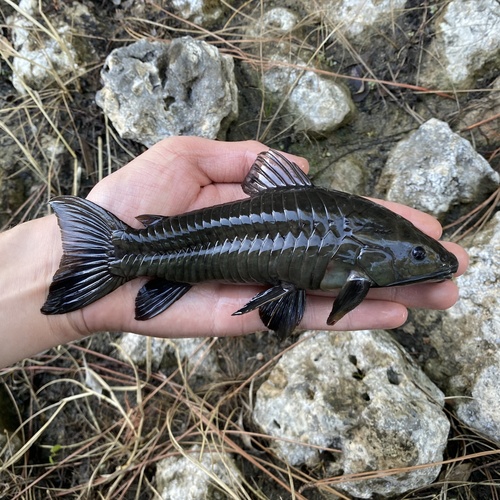
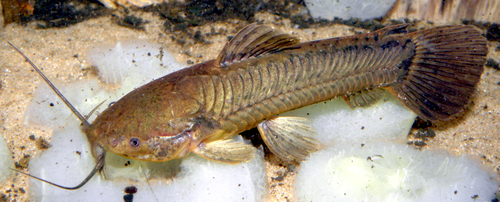
This fish reaches a maximum total length of eight inches, or 20 centimeters. Females are larger and more robust than males, and have a dull olive-green coloration. Males are brighter in color, with a subtle blue or violet sheen along their lateral sides. Males also have a more developed, longer pectoral fin spine that is reddish-brown, edged with orange or reddish-orange.
Callichthys callichthys is found across all major river drainages of South America. It has a very wide native range that extends from Trinidad down to Buenos Aires, Argentina, and includes the upper Amazon River and Paraguay River systems.
This species occupies a wide variety of water types, from anoxic slack water zones surrounded by dense vegetation to slightly turbid, free-flowing streams. It can survive in water with a pH between 5.8 and 8.3, water hardness from 0 to 30 dGH, and temperatures between 64 and 83 °F, or 18 to 28 °C. If its habitat dries out, C. callichthys can move over land to reach new water sources, thanks to its ability to swallow air and absorb oxygen from the atmosphere through its intestines.
It is a nocturnal feeder that eats fish, insects, and plant material. Juveniles eat rotifers, in addition to the microcrustaceans and aquatic insect larvae they find while digging into the substrate. When reproducing, the male's belly turns orange, and its pectoral spines grow longer and thicker. The male constructs a bubble nest incorporating floating plants, and guards the nest fiercely after the female lays her eggs.