About Callicera spinolae Rondani, 1843
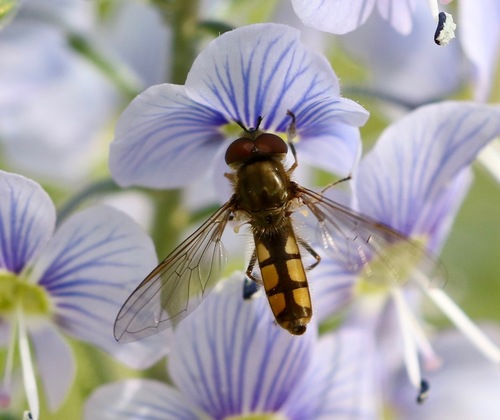
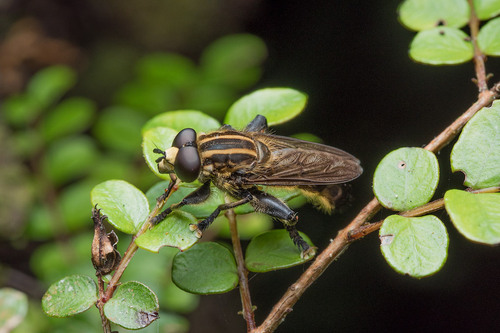
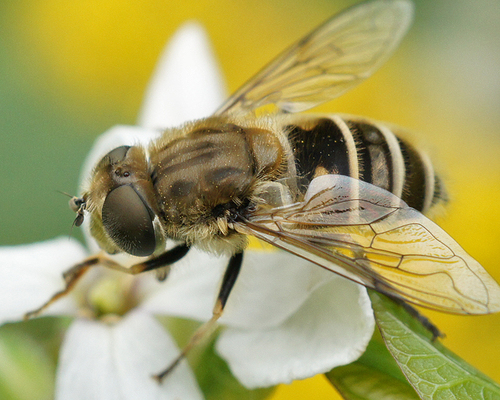
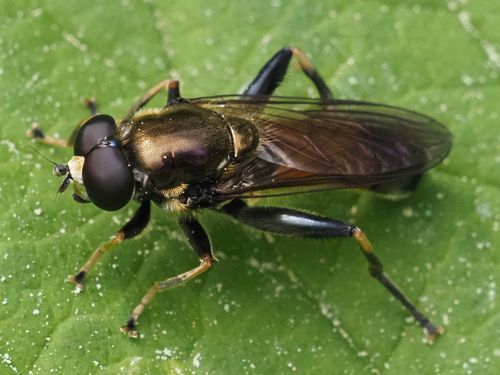
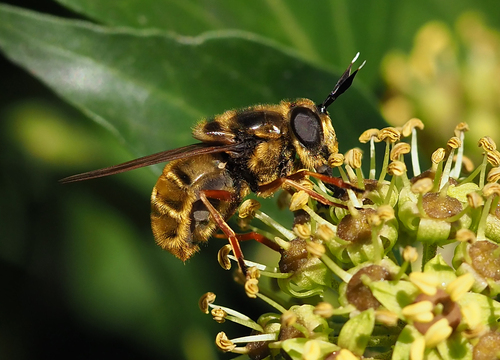
Callicera spinolae individuals have bronze-colored bodies, with an abdomen covered in golden hairs that form stripes along its length. This striped pattern makes C. spinolae resemble wasps and bees. The species also has compound eyes, and black antennae with white tips. C. spinolae is one of the largest hoverfly species native to the United Kingdom, with a wing length of 10–12 mm. C. spinolae is rare across western Europe. It has been recorded in Southern France, Germany, Italy, Central Spain, Portugal, Romania, Tajikistan, Greece, and Russia. In the United Kingdom, the species is found only in eastern England, mainly in East Anglia. This hoverfly occurs in mature or ancient woodlands. Its suitable habitat requires a mix of mature, dead, and dying deciduous trees, which provide rot holes where C. spinolae lays its eggs. The species will also lay eggs in trees pollarded by humans, because pollarded trees are more likely to develop rot holes. C. spinolae can act as a bioindicator species, signaling the presence of dead or dying trees in a woodland habitat. Adults are often found close to flowering English ivy (Hedera helix), which they feed on. H. helix is one of the few plant species that flowers in autumn, providing pollen and nectar during this season. The rot holes occupied by C. spinolae are also used by other animals, including the closely related hoverfly Callicera aurata. Birds like the tawny owl (Strix aluco) and bats like the brown long-eared bat (Plecotus auritus) also use these rot holes in ancient woodlands. C. spinolae uses rot holes from a wide range of deciduous tree species, including field maple (Acer campestre), beech (Fagus sylvatica), horse chestnut (Aesculus hippocastanum), ash (Fraxinus excelsior), and black poplar (Populus nigra).