About Calliactis tricolor (Le Sueur, 1817)
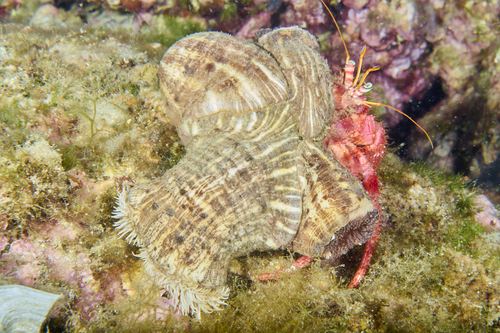
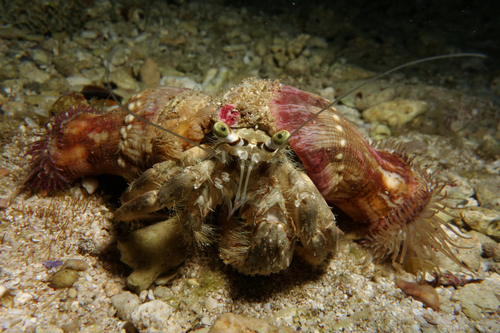
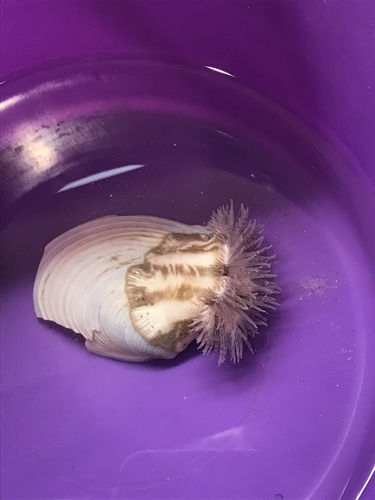
Calliactis tricolor (Le Sueur, 1817) is a sea anemone with a conical shape, a smooth outer surface, and a wide base. Its column height ranges from 2.5 to 7.5 centimetres (0.98 to 2.95 in). It is typically some shade of dull red, brown, olive, or purple with cream stripes, and has a band of dark spots near its base. The oral disc has a fringe of approximately 200 short tentacles that may be white, orange, or pink. The mouth sits at the center, surrounded by bands of yellow, red, and pinkish-purple. When threatened by predators, this anemone can release orange or white threads that bear stinging cnidocytes. Calliactis tricolor is distributed in the Caribbean Sea, the Gulf of Mexico, and along the eastern coast of Florida. This anemone can reproduce asexually via longitudinal fission. Before this reproductive method was observed, its means of reproduction was unknown; the discovery of numerous very small specimens in a single location indicates that sexual reproduction may also occur occasionally. Ecologically, Calliactis tricolor may adhere to rocks, but it is most often found attached to the hard surface of a living animal. This can include the carapace of a crab, a hermit crab occupying an empty gastropod shell, a clam, or other living molluscs such as the tulip shell (Fasciolaria tulipa) or the Caribbean crown conch (Melongena melongena). This association is a symbiotic relationship: the anemone gains better access to food as its host moves around, while the host gains protection from predators thanks to the anemone's stinging cells. Shells of the thinstripe hermit crab (Clibanarius vittatus) often carry this tricolor anemone. The anemone is usually quite small, though it may reach several centimetres in diameter. The crab actively collects the anemone from its rock base and places it on its shell, later transferring the anemone to a new larger shell when it outgrows the current one. Calliactis tricolor is also often found attached to gastropod shells occupied by another hermit crab, Dardanus venosus. When this crab finds an anemone, or after it moves into a new shell, it taps the edge of the anemone's base multiple times with its claw. This tapping causes the anemone to relax, letting the crab lift it off its original attachment surface and place it on the new shell. The anemone clings with its tentacles until its base is firmly settled in place. In experimental trials, Dardanus venosus showed a preference for large anemones over small ones, placing a large anemone on the top of its shell. When offered small anemones, it ate some and placed others near the opening of its shell.