About Calliactis polypus (Forsskål, 1775)
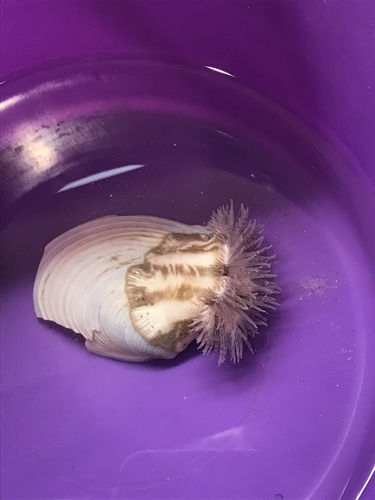
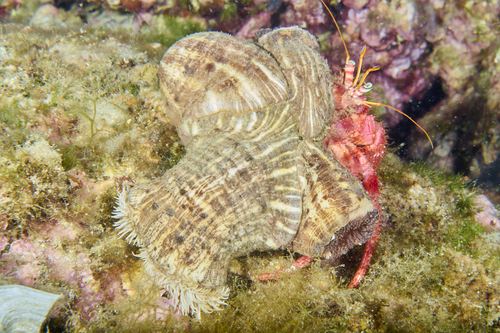
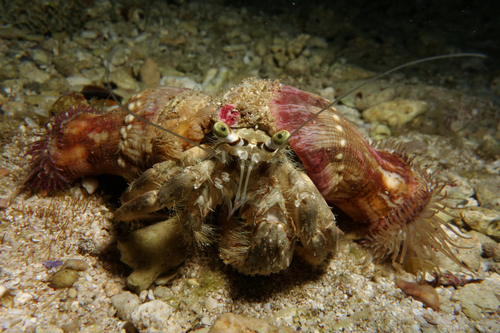
Calliactis polypus can grow up to 8 cm (3 in) in length. Multiple individuals of this anemone species can grow on a single shell. Its base is wide, has wavy edges and pink striations, and flares out over the surface of the shell. Its column is wider at the base than it is further up, and bears pale brown and white patches alongside longitudinal striations. Its oral disc surrounds the mouth with several whorls of long, brownish translucent tentacles that have paler bases. Calliactis polypus is distributed across the Indo-Pacific region and the Red Sea. It inhabits the neritic zone, at depths down to approximately 25 metres (80 ft). Calliactis polypus lives as a commensal of several hermit crab species, including Dardanus gemmatus. The anemone itself has no natural inclination to attach to a gastropod shell, whether the shell is occupied by a hermit crab or not. Instead, the hermit crab actively seeks out the anemone: it taps and massages the base of the anemone's column with its legs until the anemone relaxes and its pedal disc detaches. The crab then picks up the anemone and holds it against the shell the crab inhabits. Both the pedal disc and the tentacles of the anemone are very sticky, and either can quickly form a firm attachment to the shell.