About Calleida viridipennis (Say, 1823)
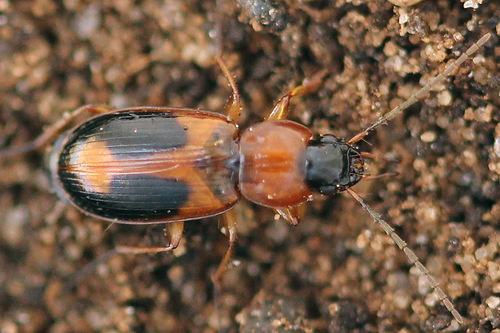
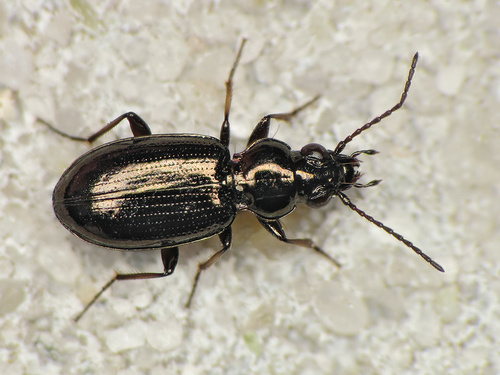
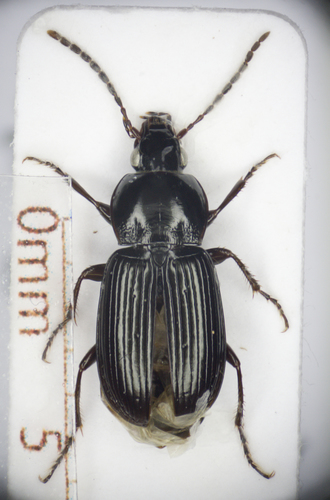
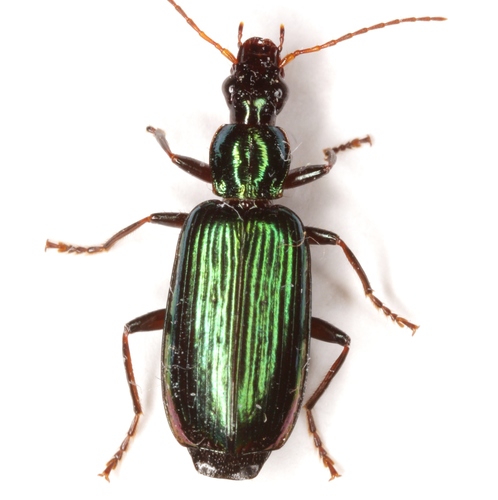
Calleida viridipennis (Say, 1823) is a species of ground beetle in the Carabidae family, commonly called carabid beetles. On average, individuals of this species grow to 10 millimeters in length. It can be recognized by its green-black metallic exoskeleton, trapezoidal head, and characteristic large eyes. Functional wings sit beneath the exoskeleton, giving this beetle the ability to fly. C. viridipennis has an omnivorous diet that includes animal and plant matter, and it acts as a predator of the tortoise beetle Hemisphaerota cyanea larvae, as well as caterpillars of the fruittree leafroller Archips argyrospila. Among carabid beetle species, food preferences are often linked to habitat preferences. The sex ratio of females to males in C. viridipennis does not differ significantly from the expected 1:1 ratio. This species ranges across northern to southern America, with confirmed observations from southwestern New York through southwestern Iowa, Texas, Louisiana, Florida, and eastern Mexico. It has also been recorded on the Caribbean island of Saint Martin, and possible sightings have been reported in Utah, Arizona, and California. Research on predation by C. viridipennis has focused on populations in Louisiana and Florida. C. viridipennis prefers habitats of open forests and swamps, where it lives under tree bark. Adult beetles have been found under the bark of baldcypress (Taxodium distichum) and black willow (Salix nigra), located more than 40 centimeters above the water level in forested wetlands. The species overwinters as an adult under tree bark. Individuals leave their overwintering habitat under bark in late February or early March, when temperatures are more suitable and food sources are more available; this timing aligns with the activity of fruittree leafroller caterpillars. Like all beetles, C. viridipennis has a four-stage life cycle: egg, larva, pupa, and adult. Carabid beetles lay their eggs on foliage and within host webs. C. viridipennis is a spring breeder, unlike autumn-breeding carabid species that lay eggs in fall and overwinter as larvae. Spring breeding by C. viridipennis produces larvae that develop from late March to early or mid-October, and the species overwinters in the adult stage after breeding. Adults live approximately one year.