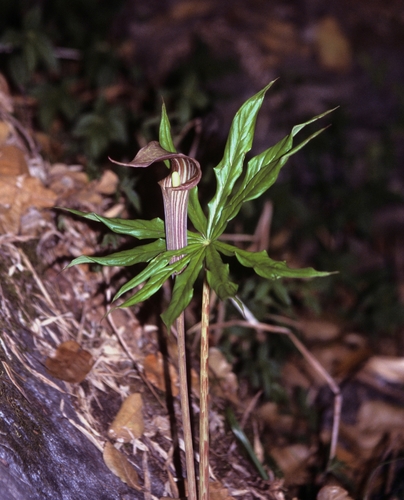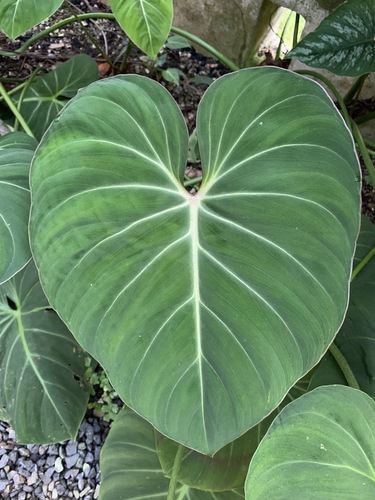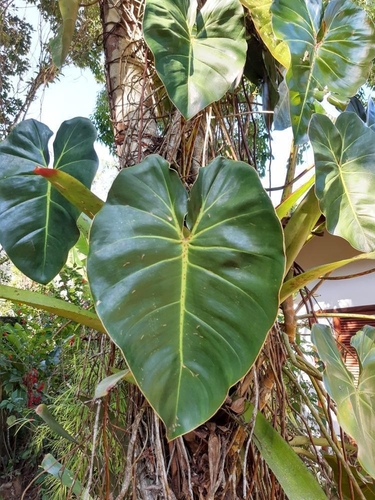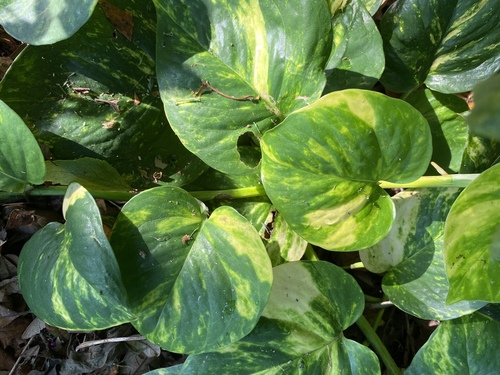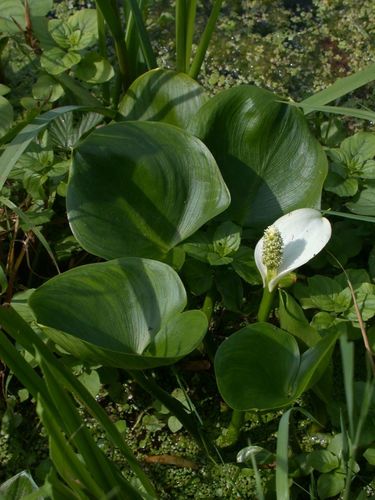
Calla palustris L. is a plant in the Araceae family, order Alismatales, kingdom Plantae. Toxic/Poisonous.

Photo of Calla palustris L. (Calla palustris L.)
🌿 Plantae ⚠️ Poisonous

Calla palustris L.

Calla palustris L.

Calla palustris L. is a poisonous bog-growing perennial with white spathes and red berries, native to cool Northern Hemisphere regions.

Family
Genus
Calla
Order
Alismatales
Class
Liliopsida

⚠️ Is Calla palustris L. Poisonous?

Yes, Calla palustris L. (Calla palustris L.) is classified as poisonous or toxic. Toxicity risk detected (mainly via ingestion); avoid direct contact and ingestion. Never consume or handle this species without proper identification by an expert.

About Calla palustris L.

Calla palustris L. is a rhizomatous herbaceous perennial plant that grows in bogs and ponds. Its leaves are rounded to heart-shaped, 6 to 12 centimeters (2+1⁄4 to 4+3⁄4 inches) long, 4 to 12 centimeters (1+1⁄2 to 4+3⁄4 inches) broad, and borne on a 10 to 20 centimeter (4 to 8 inch) petiole. It produces a greenish-yellow inflorescence on a spadix about 4 to 6 centimeters (1+1⁄2 to 2+1⁄4 inches) long, which is enclosed in a white spathe. Its fruit is a cluster of red berries, with each berry holding several seeds. Fresh Calla palustris L. is very poisonous due to its high oxalic acid content. However, like the rhizomes of Caladium, Colocasia, and Arum, its rhizome becomes edible after drying, grinding, leaching, and boiling. This species is native to cool temperate regions of the Northern Hemisphere, including central, eastern and northern Europe (from France and Norway eastward, not present in Britain), northern Asia, and northern North America (Alaska, Canada, and the northeastern contiguous United States).
Photo: (c) Bastiaan, some rights reserved (CC BY-NC-ND) · cc-by-nc-nd

Taxonomy

Plantae Tracheophyta Liliopsida Alismatales Araceae Calla
⚠️ View all poisonous species →

More from Araceae

Sources: GBIF, iNaturalist, Wikipedia, NCBI Taxonomy · Disclaimer

Identify Calla palustris L. instantly — even offline

iNature uses on-device AI to identify plants, animals, fungi and more. No internet needed.

Download iNature — Free

Start Exploring Nature Today

Download iNature for free. 10 identifications on us. No account needed. No credit card required.

Download Free on App Store