About Caliroa cerasi (Linnaeus, 1758)
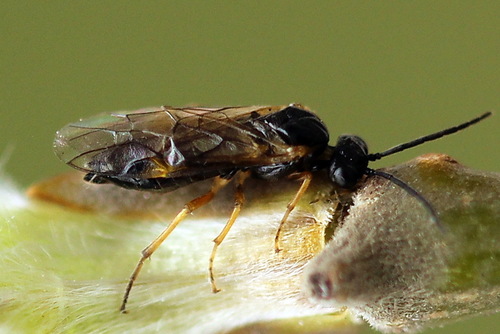
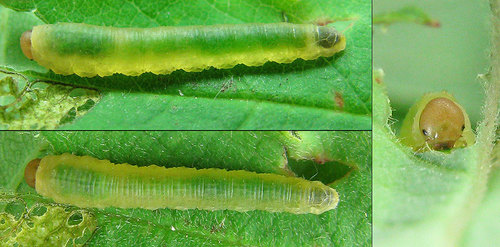
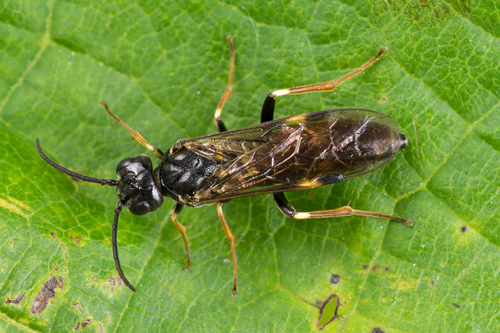
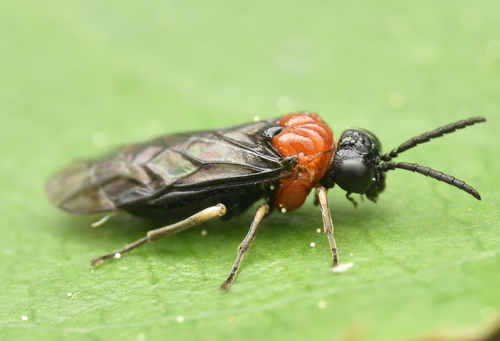
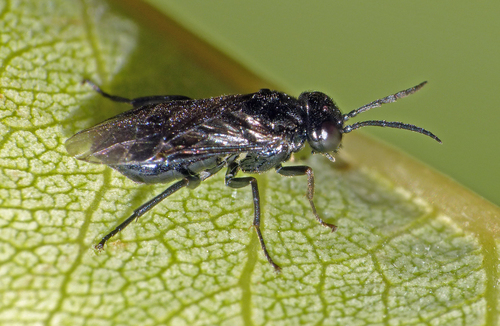
Caliroa cerasi is a species of sawfly in the family Tenthredinidae. Its larvae are commonly called pear slugs or cherry slugs, and this species is a nearly worldwide agricultural pest. The species was first formally described by Carl Linnaeus in 1758, in the 10th edition of his landmark work Systema Naturae.
As an important pest, pear slugs feed on the leaves of cherry, pear, plum, and hawthorn trees, leaving only a skeleton of leaf veins after feeding. The larvae coat themselves in green slime, which makes them unappetizing to predators. They molt between five and eight times before reaching full growth. Once fully grown, larvae drop from their host tree to the ground and pupate underground.
Adult sawflies emerge from their pupal cases and climb out of the soil to mate, then lay eggs on the leaves of the host plant to complete the life cycle. Some other sources disagree with the claim that adult females climb the tree to lay eggs, and instead state that females fly to the tree. This detail matters for controlling the pest in horticulture, where adhesive glues are often used to block and manage climbing pests. In New Zealand, the biocontrol species Lathrolestes luteolator has been released on two separate occasions to attempt control of this agricultural pest.