About Calidris ptilocnemis (Coues, 1873)
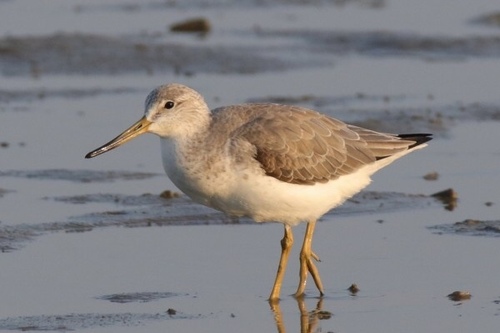
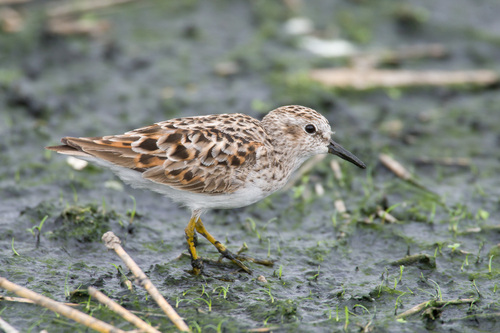
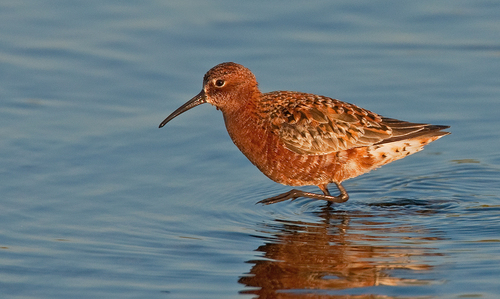
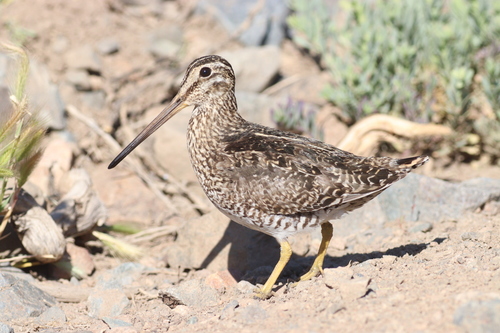
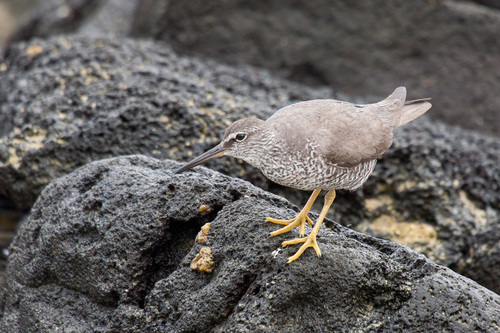
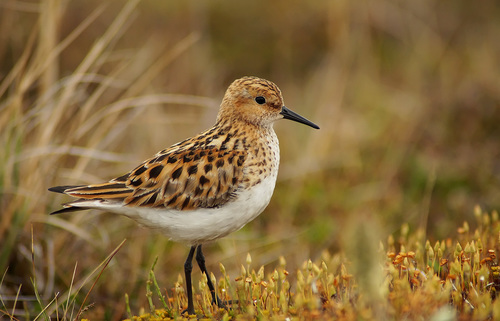
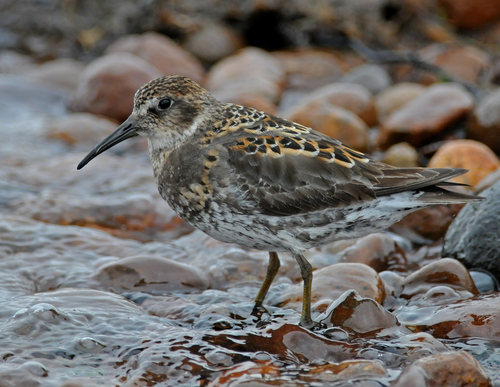
This species has the scientific name Calidris ptilocnemis (Coues, 1873). Adult rock sandpipers have short yellow legs and a medium, thin dark bill. Their upper body is dark with a slight purplish gloss, and their underparts are mainly white. The breast is smeared with grey, and the rump is black. The nominate subspecies from the Pribilof Islands has a bold black belly patch when in breeding plumage; the remaining three subspecies more closely resemble the purple sandpiper than the nominate subspecies. In winter, these birds migrate south to rocky ice-free Pacific coasts. Subspecies engage in leapfrog migration for winter, with more northerly breeders moving to wintering grounds south of those of more southerly breeders. The species breeds in tundra habitats, typically favoring drier, more desolate areas with limited vegetation like lichen, moss, and sparse grasses. It can form quite large flocks during winter. Rock sandpipers that spend the non-breeding season in the Pacific Basin, Alaska, must endure harsh conditions and rely on high quality prey, especially their primary prey, the bivalve Macoma balthica.