About Calidris fuscicollis (Vieillot, 1819)
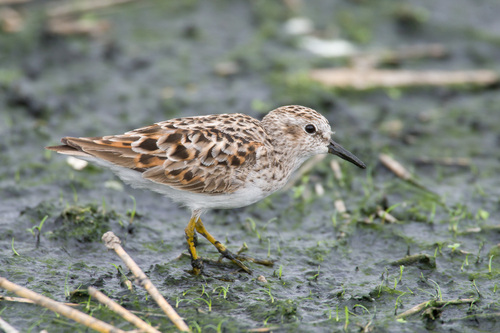
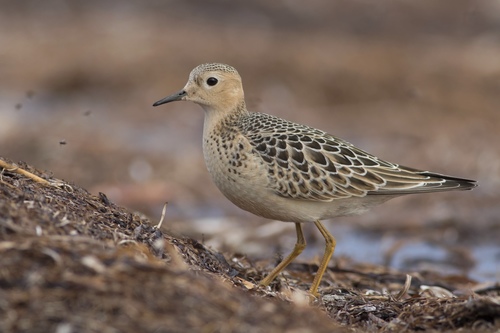
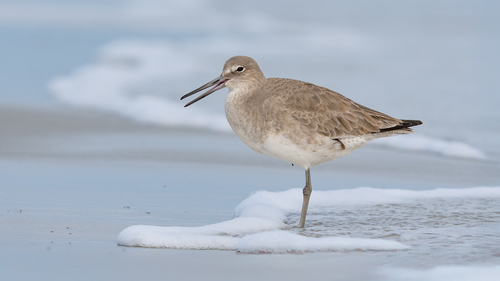
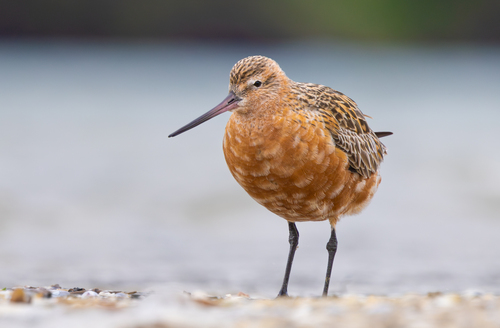
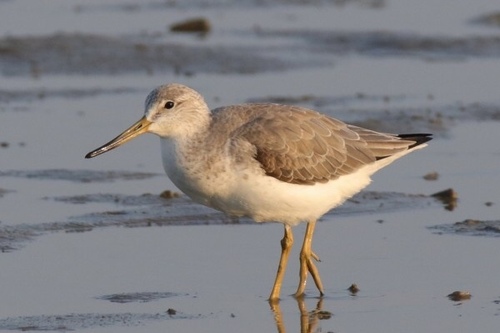
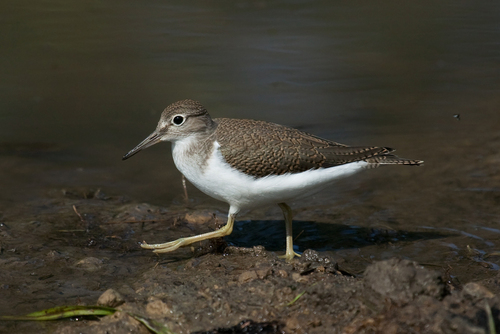
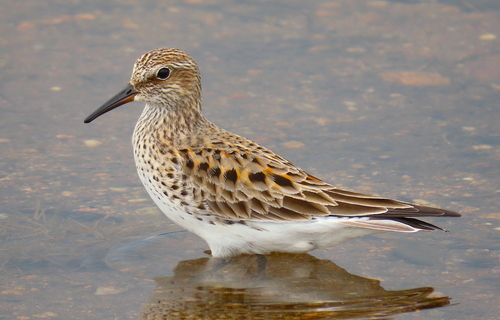
The white-rumped sandpiper, scientifically named Calidris fuscicollis (Vieillot, 1819), is a relatively small shorebird. It measures 15–18 cm (5.9–7.1 in) in length, with a wingspan of 36–38 cm (14–15 in). The upperparts of its body are dull grey-brown, and it has a white eye stripe. Its beak is medium-length, thin and dark, and its legs are very dark. This species is often confused with many similar-looking sandpipers that share its range or migration route. Its plumage is much less distinct during winter, but males and females look similar in all seasons. In adult breeding plumage, the crown and face have a brownish tinge. The supercilium is pale, the back has black feathers, and the wing coverts have grey edges. The breast and flanks are streaked, and the underparts are white. In adult winter plumage, the upperparts are dark grey with black feathers at their centers. The underparts are white, but the breast is dark grey. The supercilium is white, while the crown and eyeline are darker. Juvenile plumage has black-based feathers on the back and wing coverts. These feathers have brown edges near the scapulars and whiter edges near the wing coverts. The breast is finely streaked, and there is a white "V" marking on the back. The underparts and supercilium are white, the crown is brownish, and the face is pale. Two main field identification features for this bird are its long wings and white rump. The white rump patch is visible when the bird is in flight. Its long wings extend 5–10 mm beyond the tail. Baird's sandpiper also has long wings, but can be distinguished by its lack of a white rump. The white-rumped sandpiper also has a thin white stripe on the wing and a row of markings on the flanks below the wings. During the breeding season, the white-rumped sandpiper lives in the marshy, heavily vegetated, hummocky arctic tundra of Alaska and Canada, generally occupying patches of tundra with relatively abundant vegetation. It uses various types of wetlands during migration. In winter, it inhabits a range of freshwater and saltwater habitats including lagoons, estuaries, and marshes. In general, the species tends to avoid sandy beaches and fast-moving water. The diet of the white-rumped sandpiper consists primarily of small invertebrates, including molluscs, crustaceans, polychaetes, annelids, and both adult and larval insects. It mainly feeds on aquatic invertebrates. While it was once thought to only eat invertebrates, research has shown seeds and moss also make up part of its diet. This finding has led to the suggestion that it may be an opportunistic feeder, adjusting its diet based on time, season, and habitat. Stones and algae have also been found in the stomachs of this species, but these are most likely consumed accidentally. Stones consumed are generally the same shape and size as the seeds the bird eats, so this is likely a case of mistaken identity, and algae is probably accidentally ingested while feeding in water. When foraging on mudflats, the white-rumped sandpiper probes shallow water and mud, and also picks food items from the surface. When on the tundra, it probes deeply into moss and other vegetation to feed.