About Caleta elna
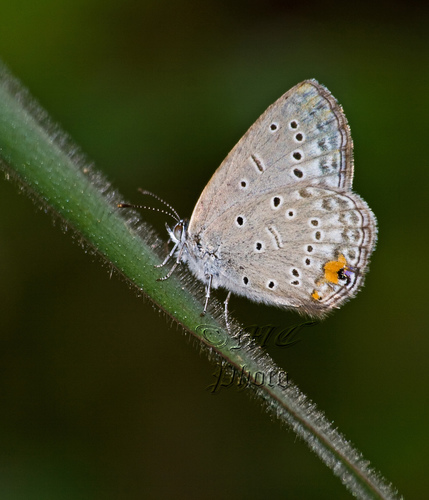
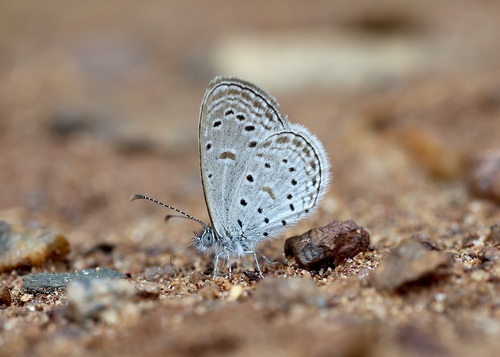
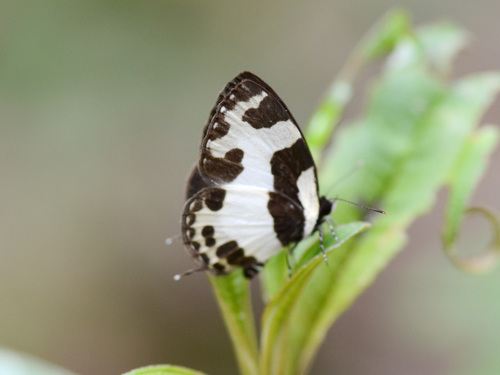
Caleta elna is a butterfly species with the following physical characteristics. On its upperside, the base color is black. A broad, oblique white medial band crosses both the forewings and hindwings, and the band is wider on the hindwings. In females, this band extends further toward the forewing costa than it does in males. In most specimens of both sexes, the band extends slightly outward above vein three. On its underside, the base color is white, marked with black patterns: a broad black band, wider than the same band in any other related forms, runs obliquely from the base of the hindwing across the forewing as far as the discocellular veinlets, then bends at a right angle to reach the costal margin. Beyond this band, the discal markings on both forewings and hindwings are very similar to those of Caleta roxus, but the terminal markings are narrow and more or less worn away (obsolescent). The apex of the forewing is more broadly black, while the subterminal line of small linear white spots on the forewing, and the transverse subterminal series of black lunules on the hindwing, are both more or less obsolescent. The antennae, head, thorax, and abdomen are black on the upperside. On the underside, the antennae shafts are speckled with white; the palpi, thorax, and abdomen have a longitudinal medial white line, and the sides of the abdomen are barred with white. This butterfly is distributed from India (where it occurs in Orissa, Sikkim, Assam, and the Andamans) through Myanmar, Thailand, Laos, Hainan, and southern Yunnan, and extends southward to Peninsular Malaysia, Singapore, Borneo, Karimata, Sumatra, Bangka, and Palawan.