About Calcinus guamensis Wooster, 1984
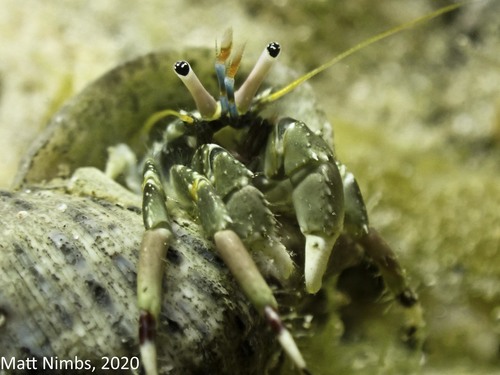
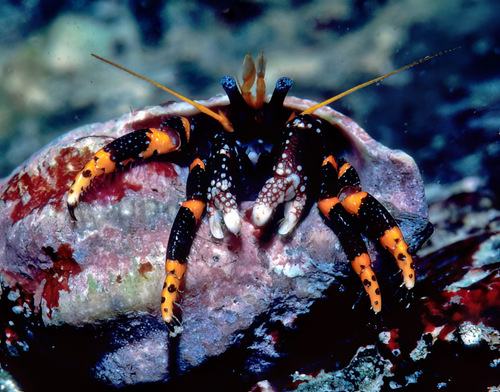
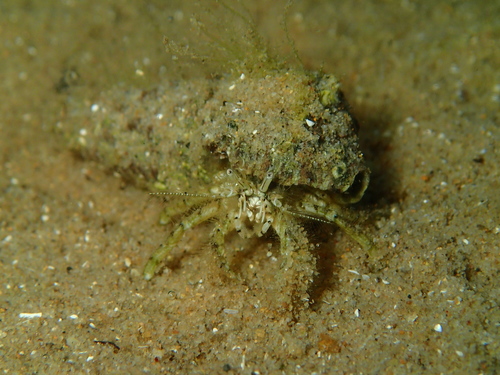
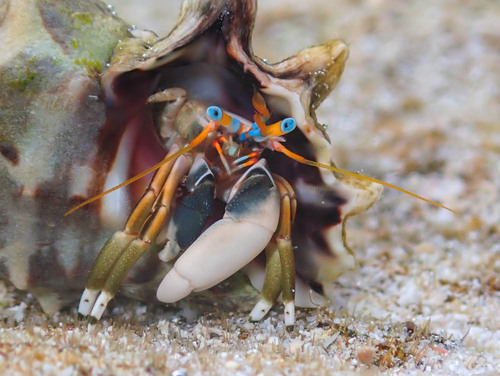
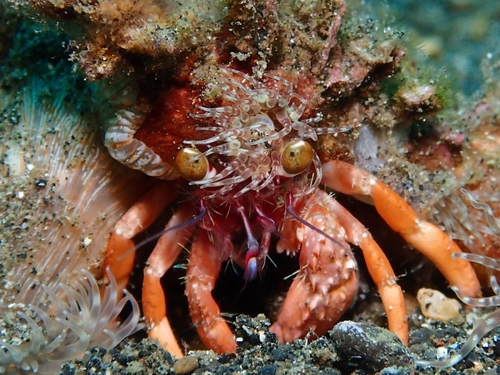
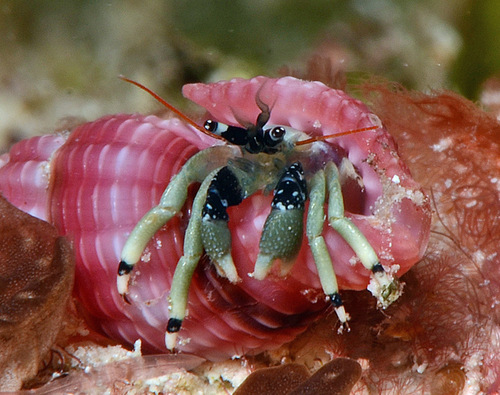
Calcinus guamensis is a small species of hermit crab, with the maximum shell width of individuals reaching approximately 6 millimeters (0.24 inches). It can be easily identified by its distinct coloration: its body is a mustard brown or olive that fades to white, and the tips of its walking legs are black. This species has uneven claws, with the left claw being noticeably larger than the right; the claws are bluish-green, which contrasts with the species’ reddish-brown body. The walking legs have alternating light and dark banding, and its beak is triangular and relatively short. When threatened, the crab uses its larger left claw to block the entrance of the shell it inhabits, creating an effective defense against predators. This defensive behavior is common for many hermit crabs in the family Diogenidae. This species lives in shallow coral reefs and rocky environments across the Indo-Pacific region. It has been recorded in Guam, Hawaii, and other areas of the Pacific. Compared to other species in the Calcinus genus, Calcinus guamensis is typically found in deeper water, at depths ranging from 3 to 20 meters (10 to 66 feet). Large populations of this crab are especially found in tide pools and surge zones, which provide both food and protection from predators. Calcinus guamensis acts as an important scavenger in reef ecosystems. It feeds on detritus, algae, and small invertebrates, which helps break down organic material and supports nutrient cycling. All hermit crabs play a key role in reef ecosystems: they are major contributors to coral reef health and protection by removing organic debris and stopping algae from overgrowing corals. This species is nocturnal, so it is most active at night when it forages for food. It displays the typical shell-swapping behavior of hermit crabs, and often competes with other hermit crabs for shells that better fit its current size. Wooster, the species’ original describer, noted that this competition for optimal shells is very intense and triggers aggressive behavior between individuals.