About Calandrella rufescens (Vieillot, 1819)
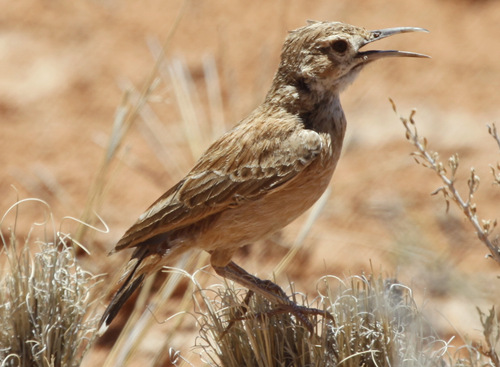
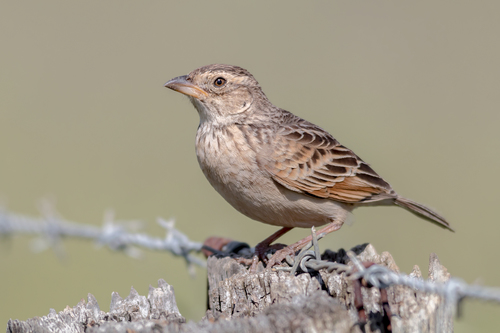
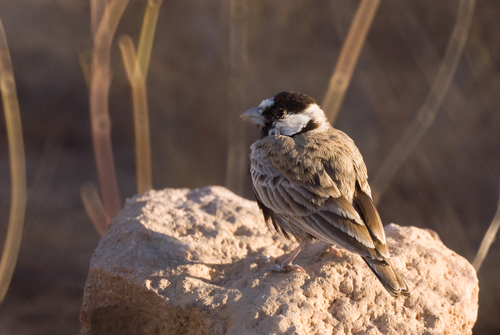
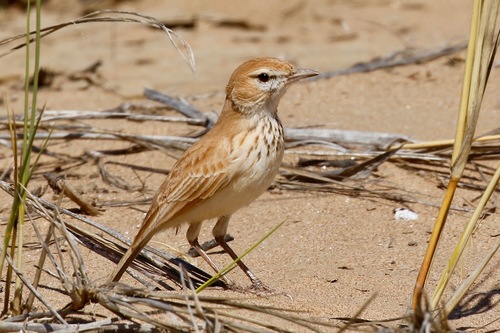
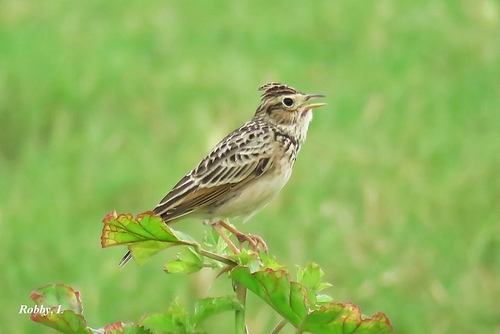
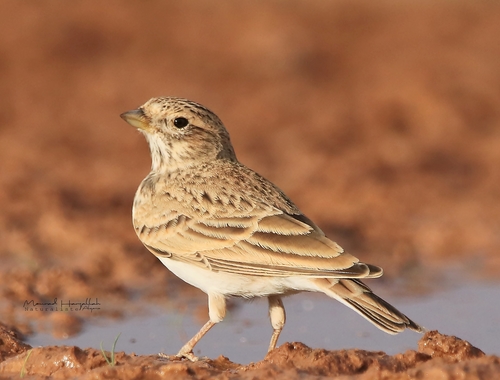
The Mediterranean short-toed lark, scientifically known as Calandrella rufescens (Vieillot, 1819), is similar in size and appearance to the greater short-toed lark, but generally has a duller look and a more heavily streaked breast. It reaches a length of 13 to 14 cm (5.1 to 5.5 in), and males and females have similar appearance. Like the greater short-toed lark, its plumage colour varies across its wide range, so colour is not a reliable feature for distinguishing the species. It is dark-streaked greyish-brown on its upperparts and white on its underparts, with a pale supercilium and a short, stubby bill. Care is needed to tell this species apart from other Calandrella larks. Unlike the greater short-toed lark, this species has no dark neck patches, and has fine streaking covering its breast. It also differs in bill and head shape: it has a shorter, less conical bill, and a more rounded, smaller head. Its song is richer, more varied, and more imitative than that of the greater short-toed lark. The Mediterranean short-toed lark breeds in Spain, north Africa, and Turkey, and ranges east across the semi-deserts of central Asia to Mongolia and China. Many populations, including the breeding populations in Spain and Africa, are non-migratory (sedentary), but some Asian birds from the northern part of the breeding range migrate south for the winter. This species is a very rare wanderer to northern and western Europe. This species inhabits dry open country, and prefers even drier, barer soils than the greater short-toed lark. It nests on the ground, and lays two or three eggs per clutch. It feeds on seeds and insects; insects make up a particularly large part of its diet during the breeding season.