About Calandrella raytal (Blyth, 1845)
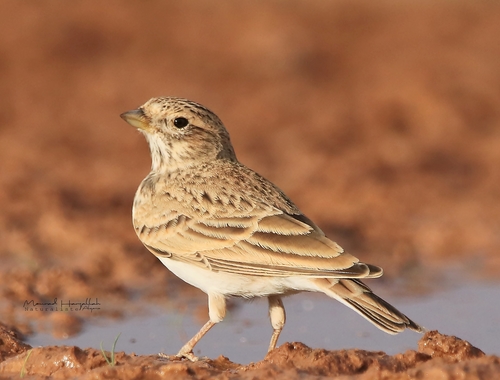
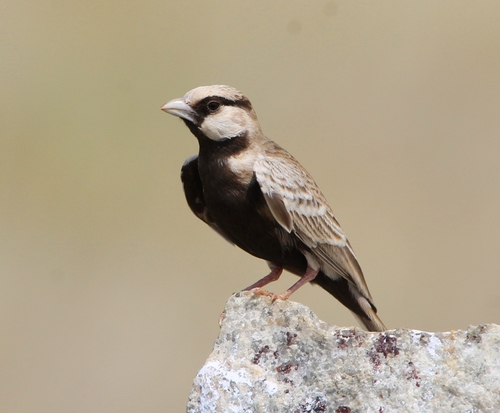
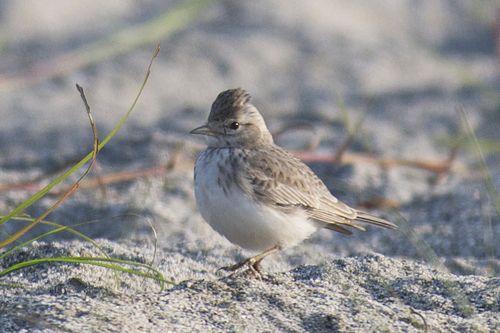
The sand lark, Calandrella raytal, is approximately 12 to 13 centimeters (4.7 to 5.1 inches) in length. This species shows considerable geographic variation, and three subspecies are currently recognized. All subspecies are dull brownish-grey, with faintly streaked upperparts, a distinctly short tail, and a fine bill. Bill length varies geographically: it is short and stubby in the western part of the species' range, and long with a fine tip in the eastern part. The subspecies C. r. krishnakumarsinhji, found around Bhavnagar in Gujarat, is greyer on its upper side, with broad dark streaks on its upper plumage and breast. For all sand larks, the lores, supercilium, area under the eye, and entire underside are white. In subspecies other than krishnakumarsinhji, the whitish breast has fine streaks, and streaking on the upperparts is faint. The nominate subspecies lives across the Gangetic plains and extends into southern Burma. Subspecies adamsi, found in West Asia (Iran, Pakistan, Afghanistan) and parts of northwest India, is paler than other subspecies. The species epithet raytal comes from the Hindi name retal, which is derived from réth, the Hindi word for sand. This species is distributed across the Gangetic plains, along the sandy banks of the Indus, Brahmaputra, Irrawaddy, and Chindwin Rivers, and along the Narmada River, where it is much rarer. It primarily inhabits sandy islands along rivers and nearby adjacent fields, and also occurs on coastal dunes and dry mud-flats. Sand larks are usually found alone, in pairs, or in small loose groups. They forage by making sudden zigzag spurts across sandy banks near water, and feed on both insects and seeds. The breeding season runs from February to May. The male's song is varied: it includes rattling and tinkling notes given while flying high in the air, followed by a series of dry rattling and whistled notes as the bird descends lower. The song flight involves soaring, then rapid wing flapping and pauses, before the bird parachutes down in a series of stepped glides with its wings and tail held fully spread. In the final stage of descent, it dives vertically before perching on a clod of earth. Males may also sing while perched on the ground, often with their crest slightly raised. Songs may incorporate calls of other bird species. The usual contact call is a clear, tinkling chissip. The nest is a deep cup built on the ground, in a patch of vegetation growing on sand. The typical clutch has three greyish-white eggs speckled with brown.