About Calandrella cinerea (Gmelin, 1789)
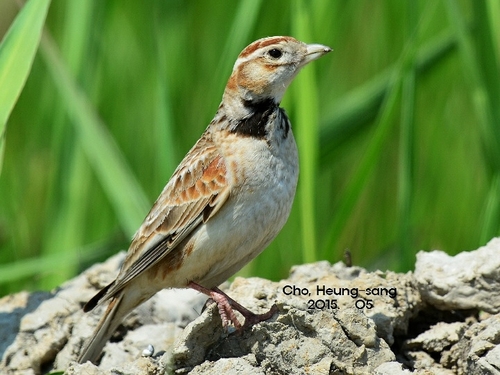
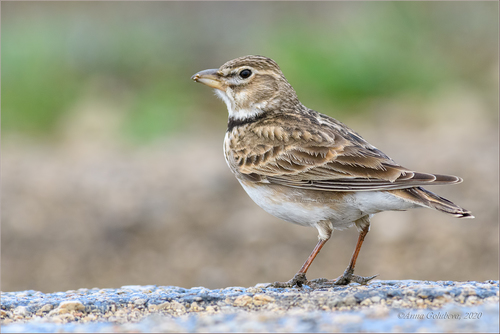
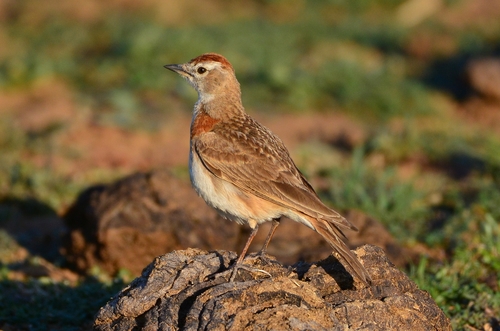
The red-capped lark, Calandrella cinerea, measures 14–15 cm (5.5–5.9 in) in length and typically holds an upright stance. Its streaked upperparts range in colour from grey to brown, and colouring varies by subspecies in both hue and brightness. The species is easily recognized by its rufous cap, white underparts, and red shoulders. It has a short head crest that is usually not noticeable, except when raised during courtship displays. Males and females have similar appearance. Juveniles do not have the red cap and red shoulders that adults have; they instead have dark spotting on the breast and white spots on their dark brown upperparts. The red-capped lark's call is a tshwerp, similar to a sparrow's call. Its song, performed during display flight, is a jumble of whistles and short trills, and the species also imitates other birds. This species lives in short grassland, including fallow agricultural areas. In eastern Africa, it inhabits highlands normally located above 1000 m, but in the cooler southern portion of its extensive range, it occurs down to sea level in suitable habitats. The red-capped lark forages on bare ground or in very short grass, moving in short runs to feed on seeds and insects. It sometimes forms flocks that can number hundreds of individual birds.