About Calandrella brachydactyla (Leisler, 1814)
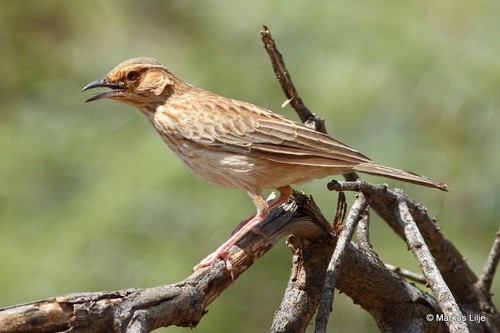
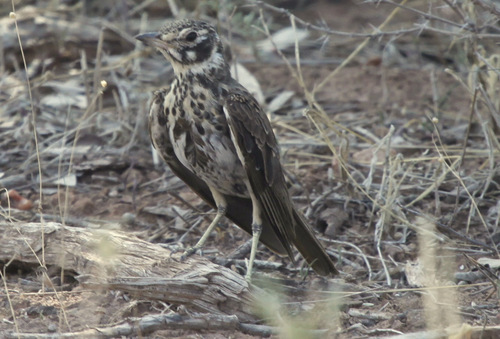
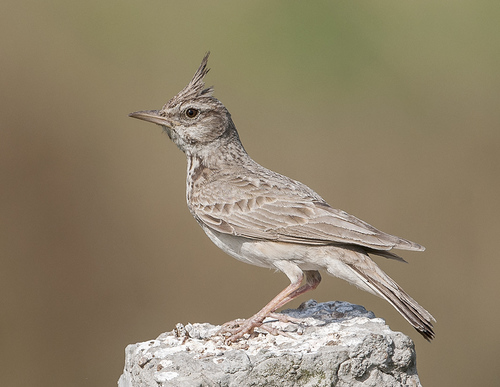
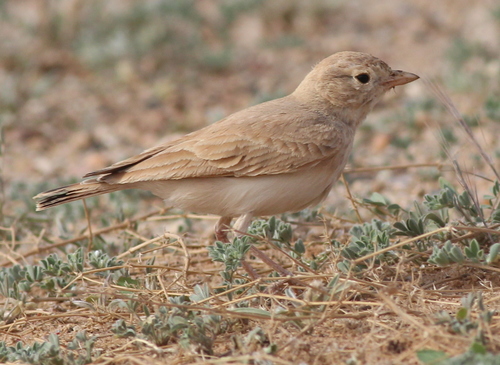
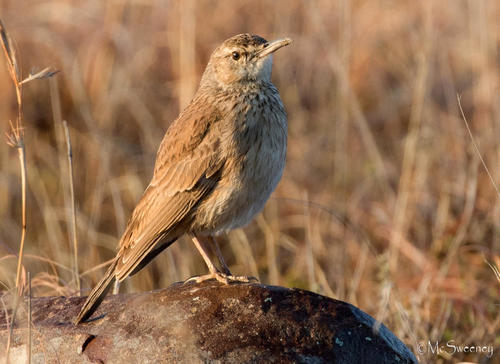
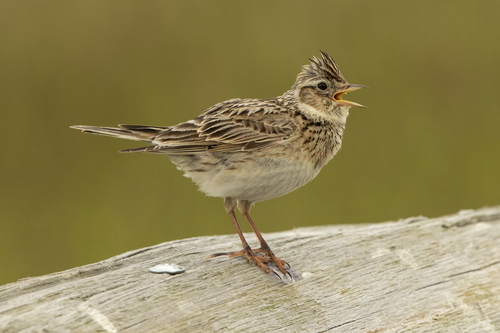
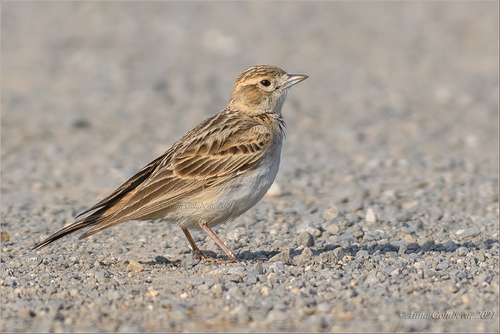
While multiple subspecies of Calandrella brachydactyla have been formally named, there is considerable gene flow between them, and the species itself forms part of a larger species complex. This is a small, pale lark that is smaller than the skylark. Its upperparts are dark-streaked greyish-brown, and its underparts are white. It has a strong, pointed bill that is pinkish overall with a grey culmen. It features a pale supercilium, dark patches on each side of the neck, and a dark tail. Some individuals in the western part of the species’ range have a rufous crown. The sexes have similar appearances. This species is paler than the Mongolian short-toed lark, which also has a shorter bill. In winter, this species forms large, compact flocks that fly in synchronized, swinging movement. Care must be taken to distinguish Calandrella brachydactyla from other similar lark species, such as the Mediterranean short-toed lark. The nominate subspecies breeds in Europe, including Iberia, France, Italy, the Balkans, and Romania, and winters in Africa. Subspecies hungarica breeds in eastern parts of Europe, while subspecies rubiginosa breeds in north-western Africa. Subspecies hermonensis, which sometimes includes the proposed taxon woltersi, breeds in Turkey, Syria, and Egypt. Subspecies artemisiana, which some authors consider synonymous with longipennis, breeds in Asia Minor and winters in southern west Asia. Subspecies longipennis breeds in Ukraine, Mongolia, and Manchuria, and winters primarily in South Asia, specifically the drier zone of north-western India. The song of Calandrella brachydactyla ranges from a dry twittering to a more varied, imitative melody. Flocks will often fly together to water at preferred sites in the mornings. In the evenings, they roost on open ground, with each individual squatting in a small depression it makes in the soil. Almost all populations except the southernmost ones are migratory, wintering as far south as the southern edge of the Sahara and India. This species is a fairly common wanderer to northern and western Europe during spring and autumn. Populations that breed in the Iberian Peninsula winter south of the Sahara in Africa. In this winter range, Calandrella brachydactyla prefers cropland and dry pastures with short shrubs, while syntopic Mediterranean short-toed larks (Calandrella rufescens) occupy even drier areas. This is a common bird of dry open country and cultivated land. It nests on the ground, laying a clutch of two to three eggs. Its diet consists of seeds and insects, with insects making up a larger portion of its diet especially during the breeding season. In colonial India, this species was hunted for food as a type of ortolan. During winter, large flocks visit parts of South Asia, and they are sometimes drawn to short grass areas along aerodromes, creating a bird strike risk for aircraft.