About Calamus calamus (Valenciennes, 1830)
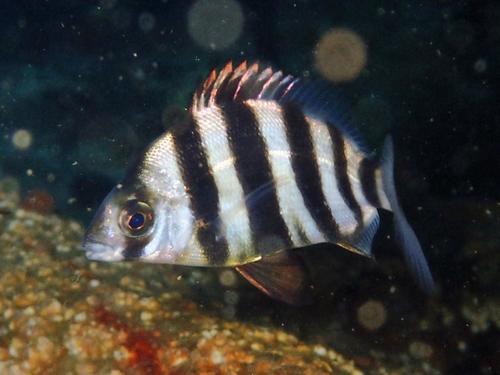
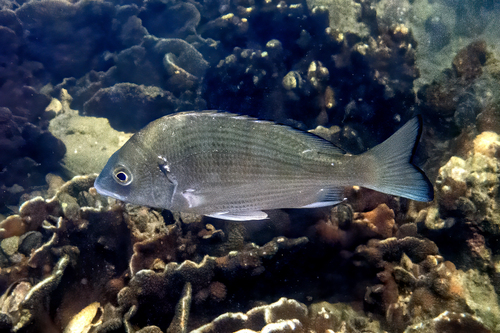
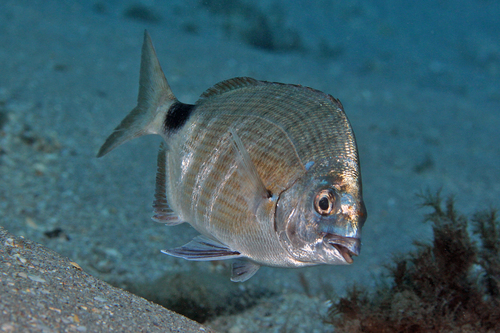
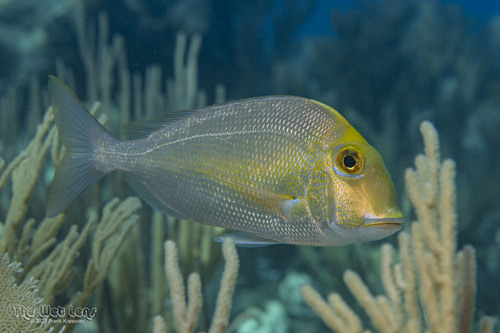
This species is the saucereye porgy, with the scientific name Calamus calamus (Valenciennes, 1830). Saucereye porgies can reach a maximum total length of 56 cm, but most adult individuals measure between 30 and 45 cm in length. While some published sources note that the species can reach a weight of up to 3 lbs, the heaviest officially recorded specimen weighed only half that amount, at 1.5 lbs. The species has a distinct color pattern: the cheek region is blue with yellow spots, and there is a noticeable dark blue smudge positioned behind the upper gill opening. Saucereye porgies are found exclusively in the western Atlantic Ocean, ranging from North Carolina in the north, east to Bermuda, and southward to Brazil. They are most abundant in waters around Key West, Florida and Havana, Cuba. Adult saucereye porgies typically live around coral reefs, where they can be easily approached by human divers. Juvenile individuals are most often found in seagrass beds, where the dominant seagrass is usually Thalassia. Saucereye porgies are carnivorous and feed on a wide range of small marine animals, including mollusks, sea worms, brittle stars, hermit crabs, other crabs, and sea urchins.