About Calamus bajonado (Bloch & Schneider, 1801)
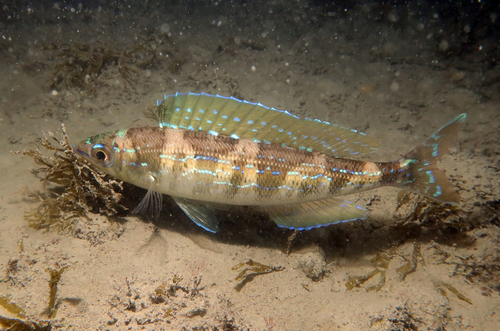
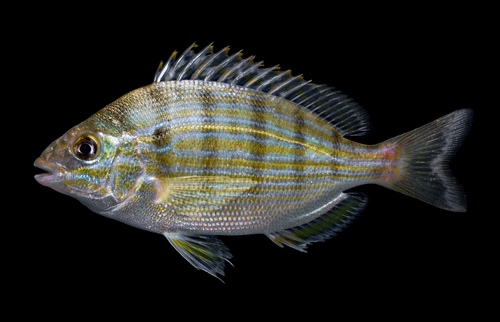
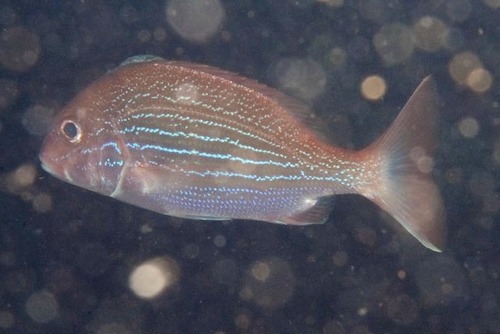
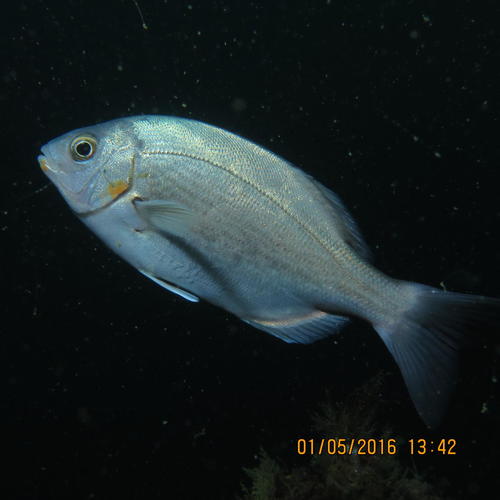
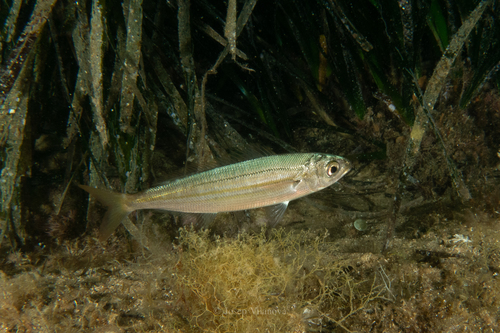
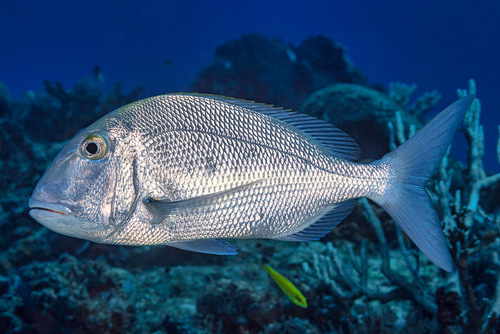
The jolthead porgy, scientifically named Calamus bajonado, typically has 12 dorsal fin rays and 10 anal fin rays. It has 15 pectoral rays, though this count can vary between 14 and 16. The lateral line of this species holds between 50 and 57 scales, which distinguishes it from other similar porgies; most members of the genus Calamus only have 45 to 49 lateral line scales. It also differs from the related species Calamus pennatula by having more pectoral rays. Distinctive color markings include a blue line under each eye and an orange rim along the mouth. The overall body color is brassy silver, with occasional blue or green iridescence, making it one of the dullest-colored species in its genus. The largest recorded jolthead porgy measured 76 cm in length, though individuals commonly grow to 54 cm. They normally reach weights up to around 8 pounds, while the heaviest recorded individual weighed 23.36 pounds. Jolthead porgies are only known to inhabit the western Atlantic Ocean, where their range extends from Rhode Island and Bermuda south to Brazil. They are abundant in the northern Gulf of Mexico and the West Indies. Individuals have been collected from seagrass beds, and they commonly swim in clear shallow waters down to 46 m (150 feet); unconfirmed reports note they have been found as deep as 180 to 200 m. They are normally solitary, but sometimes form schools near reefs. They are thought to spawn during July and August. There is ongoing debate about the diet of the jolthead porgy: some sources classify it as omnivorous, while others report it feeds mainly on animals including sea urchins (especially those of the genus Diadema), mollusks, and crustaceans.