About Calamanthus campestris (Gould, 1841)
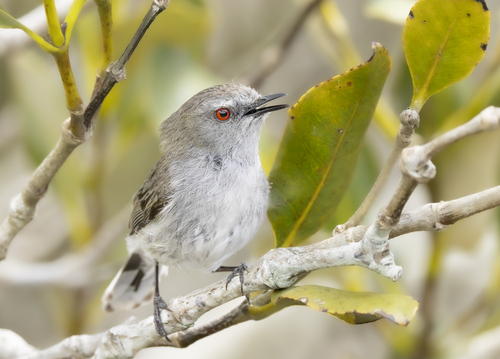
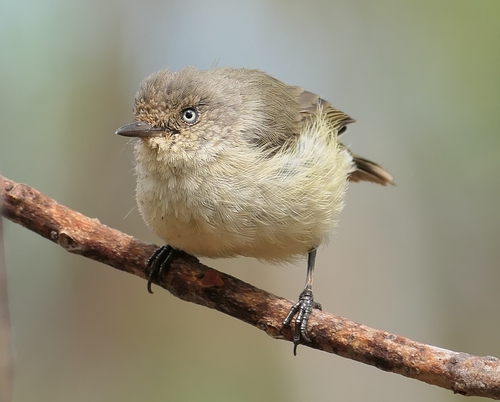
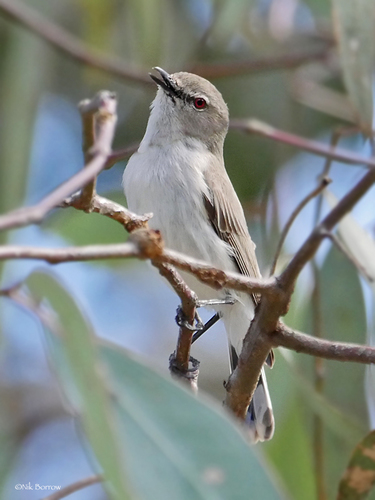
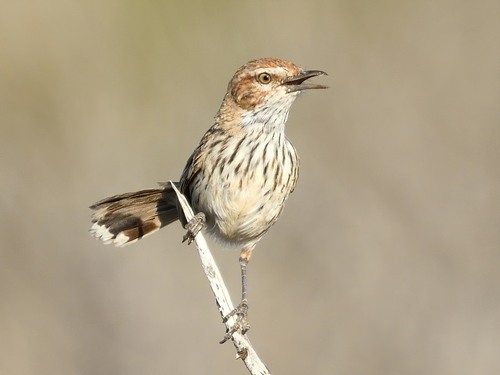
The rufous fieldwren, Calamanthus campestris, is a small terrestrial bird. It measures 11.5–13.5 cm (4.5–5.3 in) in length, has a 15.5–19.5 cm (6.1–7.6 in) wingspan, and weighs 11–16 g (0.38–0.56 oz). Its eight subspecies are divided into five groups based on physical traits, distinguished by the color of the mantle, back, scapulars, underbody, and the degree of striation across their plumage. Subspecies C. c. campestris and C. c. rubiginosus are predominantly grey-backed with a faint rufous wash, and have cream-toned underbodies marked with dark striations. Subspecies C. c. winiam has a grey back and thick streaking on its underside. Subspecies C. c. isabellinus and C. c. wayenis have rich rufous-brown upper parts and washed cinnamon underparts, with very fine or even non-existent streaking. The island subspecies C. c. dorrie and C. c. hartogi have pale-grey upper parts, white underparts, and moderate striations. C. c. montanellus is the darkest form, closely resembling the striated fieldwren; it is olive-grey above with a pale yellow underside. Females of all subspecies are similar in appearance to males, differing only by a slightly duller supercilium. Sexual dimorphism is most prominent in C. c. montanellus: males have white chin, throat, and supercilium, while females have duller yellowish-white coloring in these areas. Both sexes sing, producing a cheerful, melodious, clear sequence of whistles transcribed as whirr-whirr-chick-chick-whirr-ree-ree, typically delivered from the tops of low-lying shrubs. Singing only occurs during breeding season, though some sub-populations breed year-round. Their song can typically be heard at daybreak and for around 30 minutes after sunset. Alarm calls are sharp, transcribed as chrr-r-r and han-han-han. Rufous fieldwrens are usually observed alone or in pairs, but may be seen in small family groups of up to five individuals. They often join mixed-species flocks with similarly sized birds including inland thornbills, shy heathwrens, and slender-billed thornbills. Their tail is always held strongly cocked when hopping along the ground, though they will flatten it horizontally when running. If clearly seen, the species is unlikely to be confused with similar birds, though it shares traits with the closely related striated fieldwren. The two species can be best distinguished by their preferred habitats: the rufous fieldwren favors low shrub or heathland, while the striated fieldwren occupies rank herbage or cutting-grass swamps, though their ranges do overlap in coastal melaleuca heathland. The rufous fieldwren has noticeably greyer upperparts, whiter underparts, and a distinctive longer, finer decurved bill. In comparison, the striated fieldwren has a straighter, diagnostically wedge-shaped bill in profile, and much heavier streaking across its plumage than the rufous fieldwren. Due to the widespread but disjunct distribution of rufous fieldwren sub-populations, the species occupies a diverse variety of habitats. Western populations prefer dry open woodlands and coastal heaths, mostly in the temperate and sub-tropical zone of Western Australia. On the north-west Nullarbor Plain, rufous fieldwren populations live throughout pearl bluebush shrubland, clumps of ray flower, and a diverse range of other shrubs including mallee paperbark, mallee honey myrtle, and dwarf sheoaks. Subspecies in the arid and semi-arid regions of central Australia mainly occupy chenopod shrublands and heathlands, favoring vegetation stands of Atriplex and Sclerolaena saltbush, Maireana bluebush, and Sarcocornia samphire. Eastern populations live across gibber plains, and saline or brackish wetlands, with a preference for rocky areas sparsely vegetated with spinifex groundcover and eucalypts. Rufous fieldwrens are occasionally observed in the Little Desert, Victoria, among stunted mallee eucalypts and spinifex grasslands.