About Calamagrostis purpurascens R.Br.
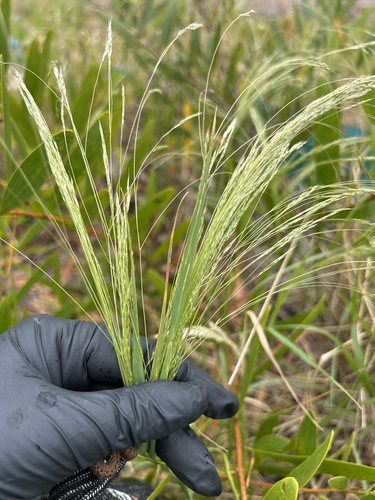
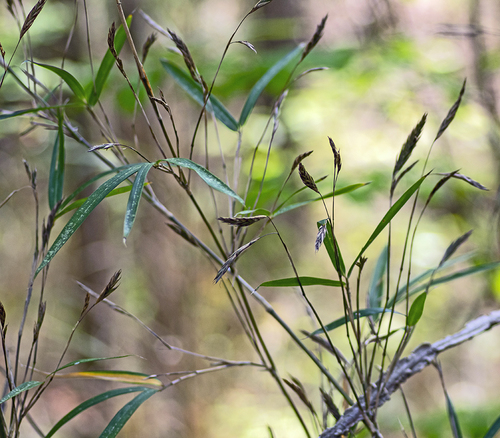
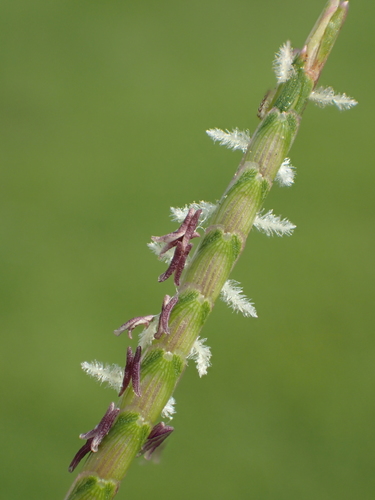
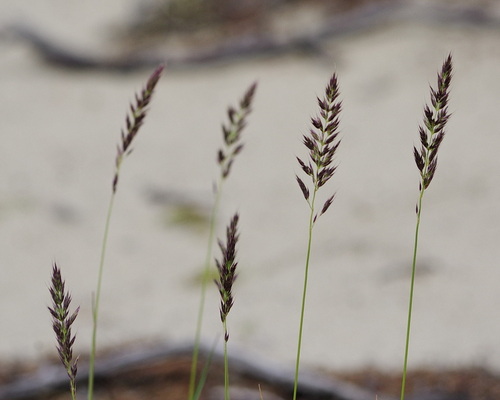
Calamagrostis purpurascens R.Br. is a large, clump-forming perennial grass that grows 30–80 cm (12–31 in) tall. It grows from short rhizomes, and produces dense flower heads that are often tinted purple, measuring 4 to 13 cm (1.6 to 5.1 in) in length. Its spikelets each hold a single flower, with two subequal glumes, and a lemma that bears a dorsal awn. The awn is longer than the glume, sharply bent, and extends past the tip of the spikelet. Flowering stems typically have only one or two leaves. This grass is native to arctic Greenland, most of Canada including Alberta, British Columbia, Manitoba, Newfoundland, the Northwest Territories, Nunavut, Ontario, Quebec, Saskatchewan, and Yukon Territory, and the western and northern United States including Alaska, California, Colorado, Idaho, Minnesota, Montana, Nevada, New Mexico, Oregon, South Dakota, Utah, Washington, and Wyoming. It occurs as a rare, scattered post-glacial relict in southern U.S. states such as Louisiana. Further south, it is also present in Chile, where it was first recorded by Rodolfo Amando Philippi in 1860; Philippi named it Deyeuxia robusta, a name now treated as a synonym. It is also found in Asia, specifically eastern Siberia. Calamagrostis purpurascens grows in dry mountainous zones, from high foothills up to near the snow line, and often roots in gaps within talus where few other plants can grow. It is an arctic-alpine species with disjunct boreal populations in eastern North America. In Minnesota, it is listed as an endangered species; it occurs in the northeastern part of the state, in the coniferous region of Cook County, growing on tall north-facing cliffs made of slate and diabase. These sites are cool, moist, and do not have heavy competition from other plant species. Ecologically, arctic skipper butterflies (Carterocephalus palaemon) feed on nectar from Calamagrostis purpurascens flowers, while their caterpillars eat the grass's shoots. Bighorn sheep (Ovis canadensis) are known to graze on this grass.