About Caesia parviflora R.Br.
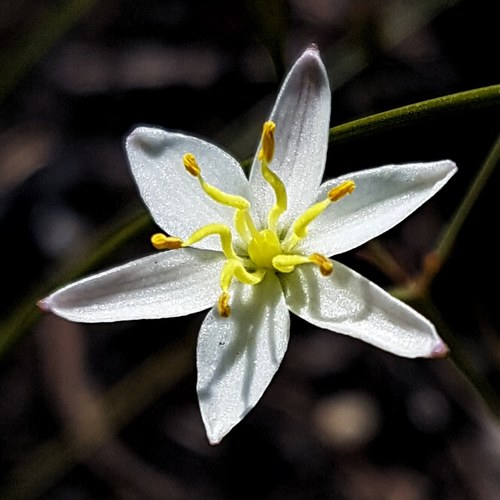
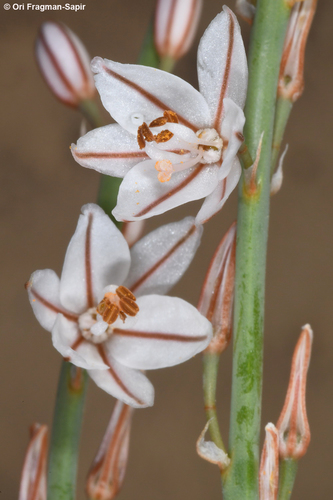
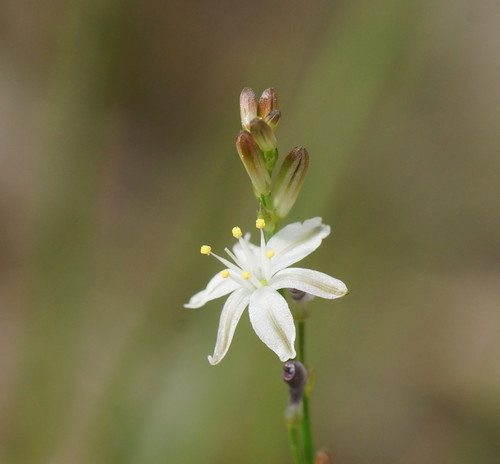
Caesia parviflora, commonly known as the pale grass lily, is a species of flowering plant. It belongs to the family Asphodelaceae, subfamily Hemerocallidoideae, and is native to Australia. It can be found across six Australian states and territories: New South Wales, Queensland, Victoria, Tasmania, South Australia, and Western Australia. This is a small plant that reaches up to 50 centimeters in height. It grows in heath, woodland, and dry sclerophyll forest, most commonly near grasses, and often occurs on sandstone-based soils. Its flowers have a lily-like appearance, are around 1.2 centimeters wide, and each petal bears three grey or purple stripes. Flowering takes place in spring and summer. The original type specimen of this species was collected in Sydney on 16 October 1803. In 1810, the species was formally published in Robert Brown's work Prodromus Florae Novae Hollandiae; Brown was a prolific Scottish botanist, who gave the species its scientific name Caesia parviflora R.Br. The genus name Caesia honours Federico Cesi, a 17th-century Italian naturalist. The specific epithet parviflora means "small flowered". At least three infraspecific taxa are currently recognised: Caesia parviflora var. parviflora, which has white flowers; Caesia parviflora var. vittata, which has blue flowers; and Caesia parviflora var. minor, which grows less than 20 cm tall and bears either blue or white flowers. The Caesia parviflora var. minor subspecies is classified as endangered.