About Cacophis squamulosus (Duméril, Bibron & Duméril, 1854)
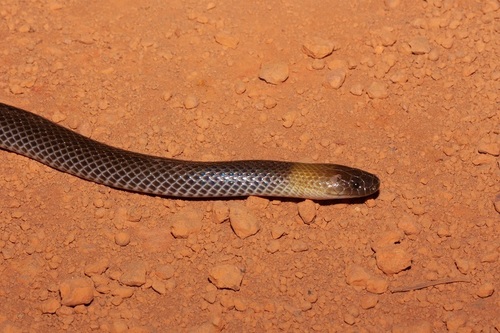
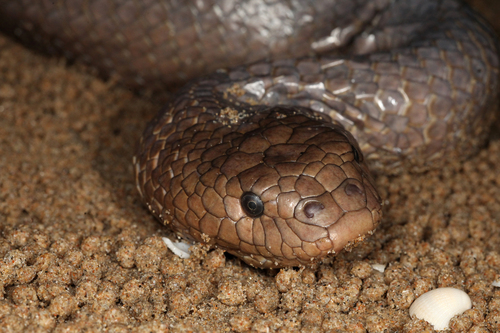
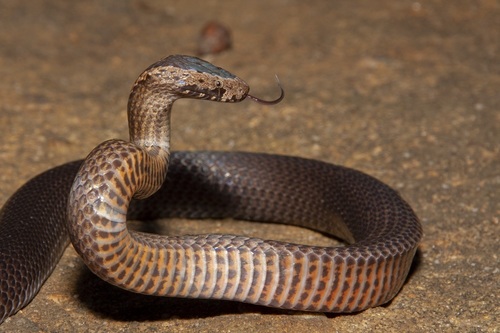
Cacophis squamulosus, commonly called the golden-crowned snake, is the largest species of crowned snake. On average, this snake reaches a total length of 50 cm (20 in) including the tail, and it can grow as large as 98 cm (39 in). Its dorsal (upper) surface ranges from grayish-brown to dark brown, while its ventral (under) surface ranges from orange to pink and has a mid-line row of black spots. Its namesake "crown" is a pale yellow-brown stripe that starts at the snout and extends backward along both sides of the head. Unlike the crowns of C. krefftii or C. harriettae, this stripe does not connect at the back of the head, and instead trails down the neck. At mid-body, the dorsal scales are arranged in 15 rows. Like other species in the Cacophis genus, the golden-crowned snake is a forest specialist, especially associated with rainforest. It prefers deeper forested areas, particularly rainforest located on mountain slopes, but it can also be found in suburban areas near waterways and moist environments that provide ground cover and shelter. This species is restricted to eastern Australia, occurring from Canberra, Australian Capital Territory, north to Cairns, Queensland. Cacophis squamulosus is an oviparous species, meaning it lays eggs.