About Cacatua sulphurea (Gmelin, 1788)
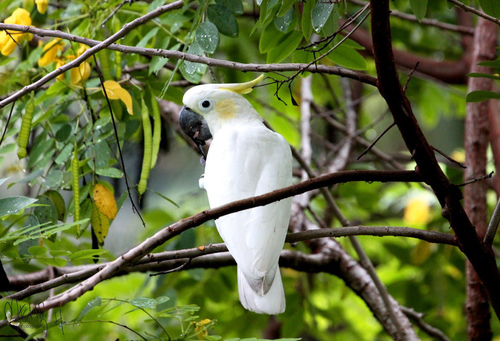
The yellow-crested cockatoo, scientifically named Cacatua sulphurea, is also known as the lesser sulphur-crested cockatoo. This is a medium-sized cockatoo that reaches around 34 cm in length. It has white plumage, bluish-white bare orbital skin, grey feet, a black bill, and a retractile crest that is either yellow or orange. Males and females of this species have a similar appearance. Yellow-crested cockatoos inhabit wooded and cultivated areas in East Timor, and on the Indonesian islands of Sulawesi and the Lesser Sundas. This species is easily confused with the larger, more common sulphur-crested cockatoo, which has a more easterly distribution. The sulphur-crested cockatoo can be distinguished from the yellow-crested cockatoo by its lack of pale yellow coloring on its cheeks, though some sulphur-crested cockatoos do develop yellowish patches. Additionally, the yellow-crested cockatoo has a brighter crest that is closer to orange in color. The citron-crested cockatoo, which is endemic to Sumba, was previously classified as a subspecies of the yellow-crested cockatoo. It is similar in appearance, but has an orange crest. The diet of the yellow-crested cockatoo consists mainly of seeds, buds, fruits, nuts, and herbaceous plants.