About Cabomba caroliniana A.Gray
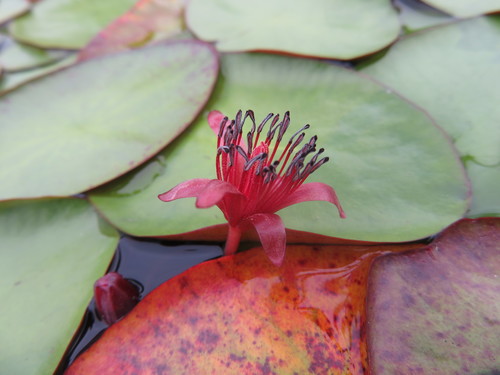
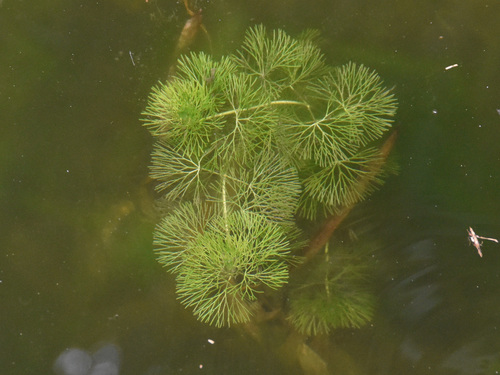
Cabomba caroliniana A.Gray is a rhizomatous, perennial aquatic herb. Its green stems reach up to 1.5 metres (5 ft) in length, and measure 1–2 millimetres (1⁄32–3⁄32 in) wide. Floating leaves of this species are 0.6–3 centimetres (1⁄4–1+1⁄4 in) long and 1–4 mm wide. Flowers are 0.6–1.5 cm wide, and float on or extend above the water surface. Sepals are white, 5–12 mm (1⁄4–1⁄2 in) long and 2–7 mm wide, while petals are also white, 4–12 mm long and 2–5 mm wide. The androecium contains (3–4–)6 stamens, and the gynoecium contains 2–3 carpels. Fruits measure 8–8.7 mm long and 2.1–2.3 mm wide, and hold ovoid to oblong seeds that are 1.5–3 mm long and 1–2.2 mm wide. This species is native to southeastern South America, including southern Brazil, Paraguay, Uruguay, and northeastern Argentina, as well as the East and West Coasts of the United States. It has been introduced outside its native range to China, Austria, Germany, Great Britain, India, Japan, Korea, Malaysia, Netherlands, New Caledonia, New Zealand, Poland, Romania, Sri Lanka, Sweden, and Thailand. Cabomba caroliniana, commonly called fanwort, grows rooted in the mud of stagnant to slow-flowing water, including streams, smaller rivers, lakes, ponds, sloughs, and ditches. Large quantities of the plant are shipped from Florida to other parts of the United States for commercial use. It is also grown commercially in Asia for export to Europe and other regions of the world. Small-scale local cultivation takes place in some areas, and introductions outside its native range are likely linked to aquarium hobbyists. In some U.S. states, this species is now considered a weed. In late summer, fanwort stems become brittle, causing the plant to break apart, which helps it spread and invade new water bodies. It reproduces by seed, but vegetative reproduction is its main method of spreading to new areas. Growth of 50 mm (2 in) per day has been recorded for this species in Lake Macdonald, Queensland, Australia. The aquarium trade has led to introductions of this species to other parts of the world, including Australia, where it is a nationally declared weed of national significance. It first arrived in Australia in 1967, spread rapidly through local waterways, outcompeted native plants, and threatens water supplies, particularly along the eastern side of the continent. It is also listed as an invasive alien species of concern in the European Union. This listing means the species cannot be traded or commercialized in the EU; the EU bans trading and selling of the plant, and requires anyone who possessed the plant before the regulation entered into force to take appropriate measures to stop it from spreading.