About Byasa alcinous (Klug, 1836)
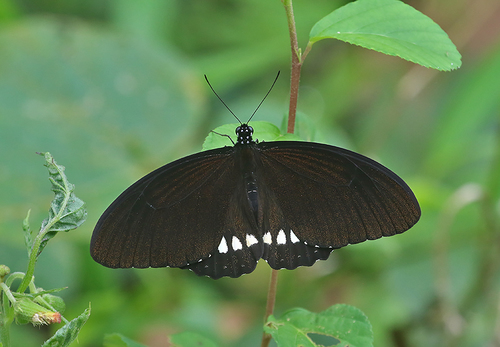
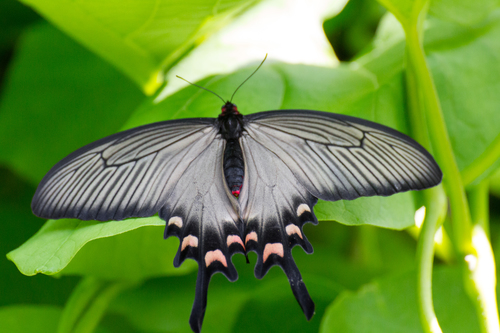
Byasa alcinous (Klug, 1836) has a wingspan of around 9 to 10 centimetres (3.5 to 3.9 inches). Its wings have a base color of black or dark brown. The hindwings feature long tails and a row of red spots along their edges. The thorax and abdomen are mostly black on both the upper and lower sides; they have several black spots, with all other areas colored red. Adult butterflies are active from May to August, in two generations per year. Caterpillars (larvae) of this species feed on Aristolochia species, including A. mandshhuriensis, A. debilis and A. manchuriensis. Recorded host plants for subspecies also include A. shimadai, A. liukiuensis, A. kankauensis, A. elegans, A. debilis, A. kaempferii, A. onoei, A. tagala, Cocculus trilobus and Metaplexis chinensis. This species passes the winter in the pupal stage. It occurs in the Asian portion of the Palaearctic realm and part of the Indomalayan realm, ranging from Bhutan and eastern China to the southern Ussuri region, Korea, and Japan. Byasa alcinous inhabits mixed broadleaved forests.