About Bursera simaruba (L.) Sarg.
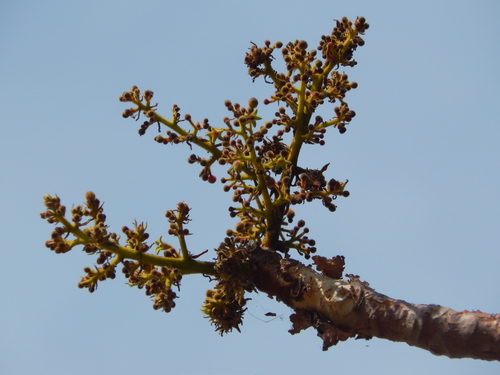
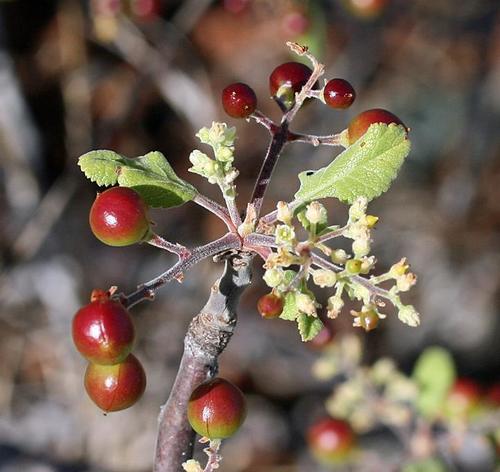
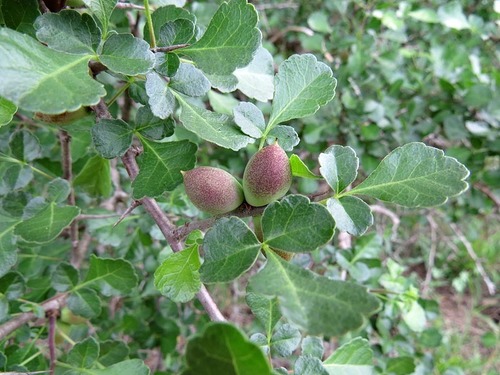
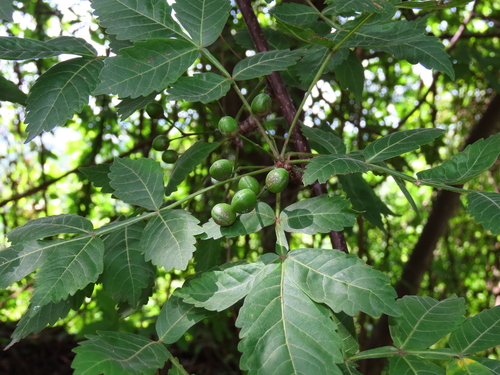
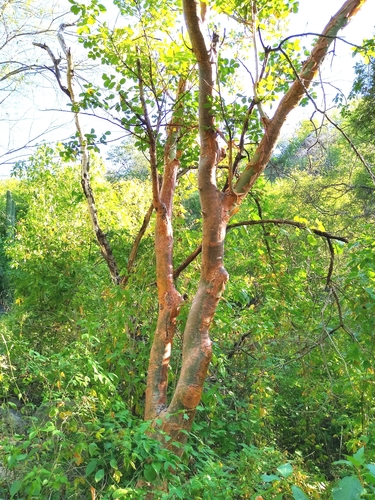
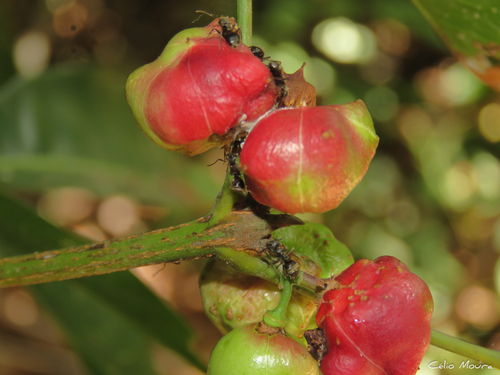
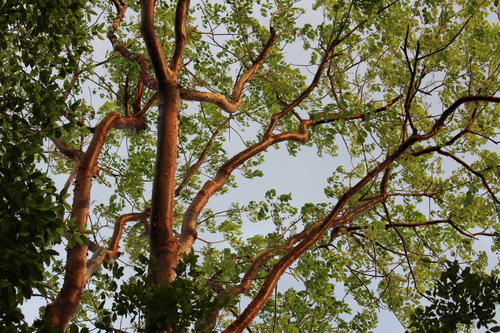
Bursera simaruba is a small to medium-sized tree that reaches 30 meters in height, with a trunk diameter of one meter or less measured 1.5 meters above ground. Its bark is shiny dark red, and its leaves are spirally arranged and pinnate, with 7 to 11 leaflets. Each leaflet is broadly ovate, 4–10 cm long and 2–5 cm broad. This tree, commonly called gumbo-limbo, is semi-evergreen. In Florida, it is also nicknamed the tourist tree, because its red, peeling bark resembles the sunburnt skin of tourists, who are a common sight in this tree’s native range. While the tree produces some ripe fruit year-round, the main fruiting season is March and April in the northern portion of its range. Its fruit is a small, three-valved, top-shaped capsule that holds a single seed. The seed is covered by a red, fatty aril (seedcoat) 5–6 mm in diameter. Both ripe and unripe fruits attach fairly loosely to their stems, and may detach spontaneously if the tree is shaken. Ripe fruit capsules split open on their own, or are cracked open by birds. Birds seek out this fruit to eat the aril, which is small but rich in lipids, making up about half of the aril’s dry weight. Gumbo-limbo is a very useful plant both economically and ecologically. It grows rapidly and adapts well to multiple habitat types, including areas with salty and calcareous soils, though it cannot tolerate boggy soils. It is also considered one of the most wind-tolerant trees, and is recommended as a rugged, hurricane-resistant species in South Florida. It can be planted to provide wind protection for crops and roads, or used as live fence posts. If small branches are simply stuck into good soil, they will readily root and grow into large trees within a few years. However, observations in Central America note that these planted fence posts do not grow a tap root, only side roots, which brings into question how effective they are for wind protection, as they are not as sturdy as true, naturally grown saplings. Gumbo-limbo wood is suitable for light construction; it is rather brittle, though the trunk is used in Haiti to make drums and as firewood. The tree’s resin, called chibou, cachibou or gomartis, is used as glue, varnish, and incense. In Sarasota, Florida, gumbo-limbo trees have been planted as street trees along a commercial section of the Boulevard of the Arts, because their roots do not damage sidewalks or utilities. The arils are an important food source for birds, including many winter migrants from North America. Local resident species such as the masked tityra, bright-rumped attila, black-faced grosbeak, and the Hispaniolan palmchat are particularly fond of gumbo-limbo fruit, as are migrants like the Baltimore oriole and the dusky-capped flycatcher. It is an especially important local food source for vireos like the red-eyed vireo when ripe fruit is abundant. Many migrant species will use gumbo-limbo trees growing in human-modified habitat, even within settlements. This creates an opportunity to attract these species to residential areas for bird watching, and to reduce competition for gumbo-limbo seeds in undisturbed habitat that rarer local resident birds may rely on. Given how eagerly some birds seek out the arils, it is possible the arils contain lipids or other compounds that could be useful to humans. However, to exploit these compounds they would likely need to be produced synthetically. While a single tree can produce a very large crop of up to or over 15,000 fruits, which translates to a raw lipid yield of more than 200 grams per harvest, individual seeds are small and difficult to harvest. Gumbo-limbo’s rapid growth, easy and low-cost propagation, and ecological versatility make it highly recommended as a "starter" tree for reforestation, even when restoring degraded habitat. It performs far better in this role overall than most exotic species. The resin is used as a treatment for gout, and the leaves are brewed to make a medicinal tea. Hexane extracts from the leaves have been shown to have anti-inflammatory properties in tests on animals. Gumbo-limbo bark acts as an antidote for exposure to Metopium brownei, also known as chechen tree, which causes extreme rashes just like the related poison ivy that often grows in the same habitat.