About Bursera fagaroides (Kunth) Engl.
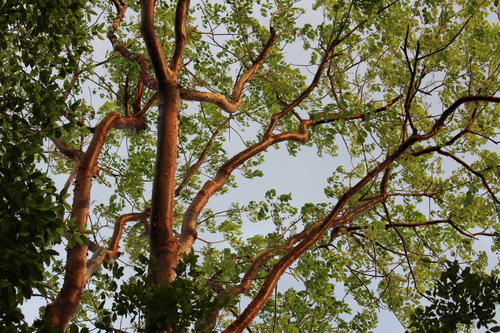
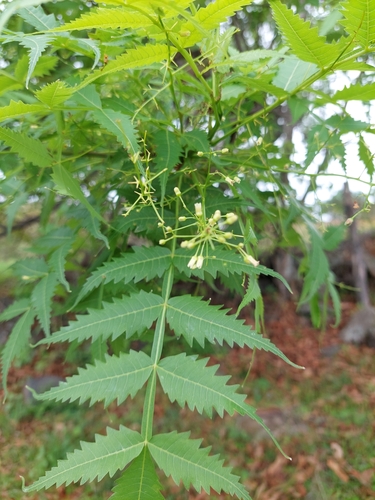
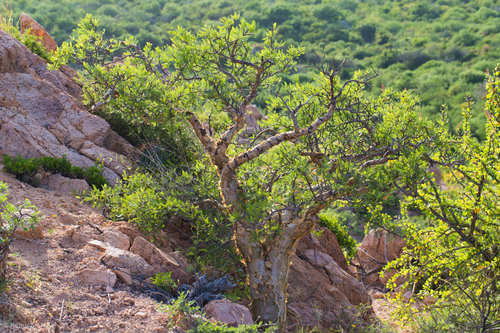
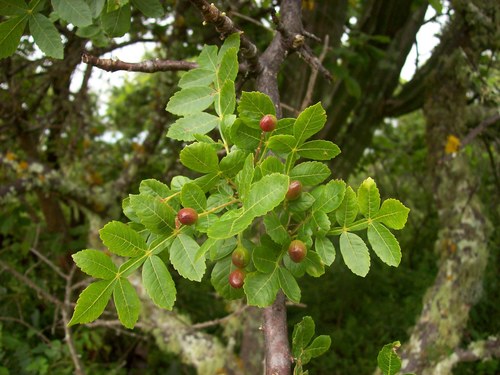
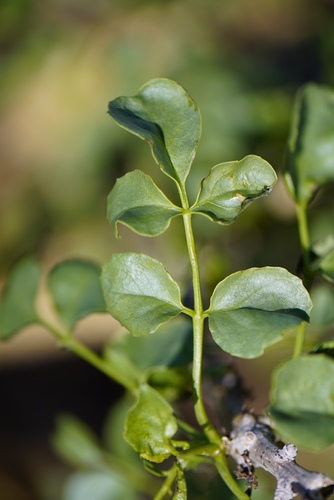
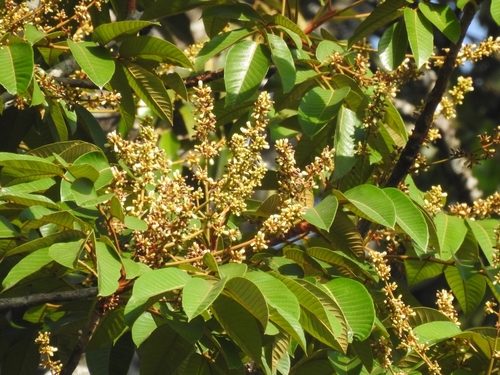
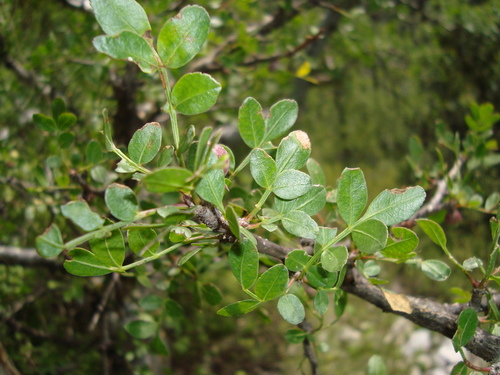
Bursera fagaroides (Kunth) Engl. is a species of flowering plant in the genus Bursera, with the common names torchwood copal and fragrant bursera. It is widespread across much of Mexico, ranging from Sonora to Oaxaca, and its range extends just into Arizona in the United States. Some sources suggest that this species may now be extirpated in Arizona. This plant grows as a shrub or tree that reaches up to 10 meters (33 feet) tall. It has a swollen trunk with peeling, red-tinged bark. Its leaves are pinnate, and each leaf is made up of 5 to 11 leaflets. Flowers grow either singly or in clusters at the ends of branches; they are white, and sometimes carry a yellow or greenish tint. The fruit is gray-brown and triangular, measuring about 6 millimeters long. It splits open when ripe to release a reddish seed. Bursera fagaroides resembles the elephant tree Bursera microphylla in appearance, but can be distinguished by its longer, narrower leaflets. This species grows in scrub in the Sonoran Desert. Further south in Mexico, it can be found in arroyos within subtropical scrub habitat. It grows in shallow soils and rocky substrates, most often limestone. Its seeds are eaten by bird species including the white-eyed vireo (Vireo griseus) and the grey catbird (Dumetella carolinensis). This species is cultivated as an ornamental plant, and can be sculpted into bonsai. In Mexico, the gum harvested from this tree has been used to treat scorpion stings and insect bites.