About Bupalus piniaria (Linnaeus, 1758)
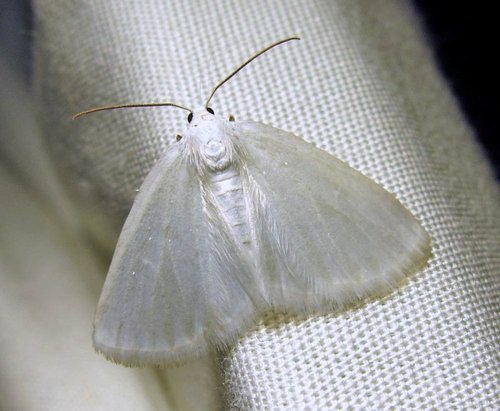
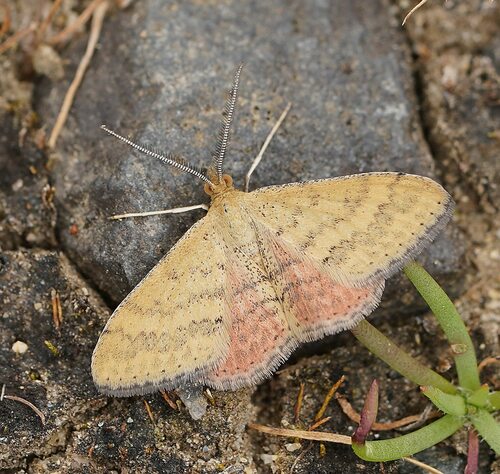
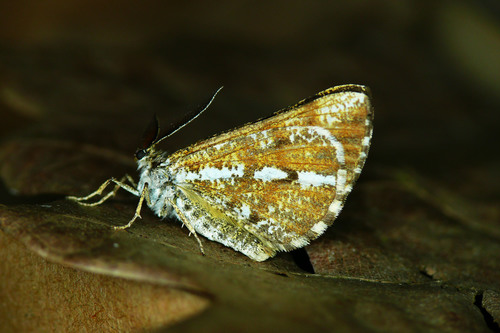
Bupalus piniaria is a moth species that lives in coniferous woodland. Adult moths fly during May and June; in the northern parts of their range, they may fly later, sometimes as late as August. Their wingspan measures 34–40 mm. This is a variable species with strong sexual dimorphism, which is always most visible in the antennae: male antennae are combed, while female antennae are plain. Females, especially when carrying fully developed ripe eggs, also have a plumper abdomen. On the upperwings of males, broad dark brown borders and spots are present, and the background wing color ranges from white in northern populations to deep yellow in southern populations. Females have plainer upperwings that range in color from yellow to brown, with slightly darker crosswise stripes. In both sexes, the wingtips are the darkest part of the upperwings. Underwings show much less sexual dimorphism between sexes. In both sexes, forewings are orange-brown with darker tips, and hindwings are marbled light brown with a whitish lengthwise stripe. Males have a wider whitish stripe on their hindwing underwings and darker forewing tips, while females have a more contrasting hindwing pattern. All four wings have a short fringe along the border, made of alternating sections of white and dark brown hairs. Bilateral gynandromorphs are easily identified in this species. The caterpillar larval stage can be a serious pest in conifer plantations. Caterpillars are green with pale lines, and usually feed on various pine Pinus species, especially Scots pine P. sylvestris and European black pine P. nigra. They have also been recorded feeding on Douglas-fir Pseudotsuga menziesii, larch Larix, and spruce Picea, including Norway spruce P. abies. Larvae go through four to six instars, then pupate in the soil, where they spend the winter.