About Bunodosoma cavernatum (Bosc, 1802)
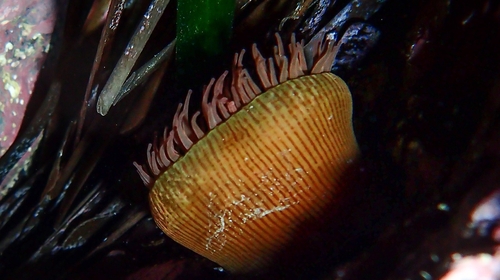
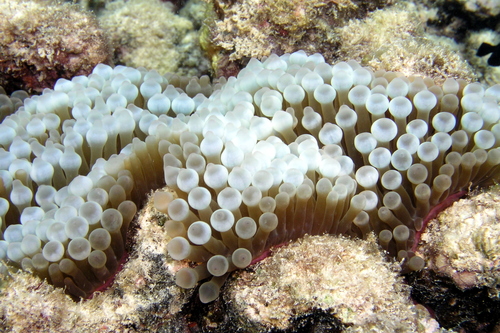
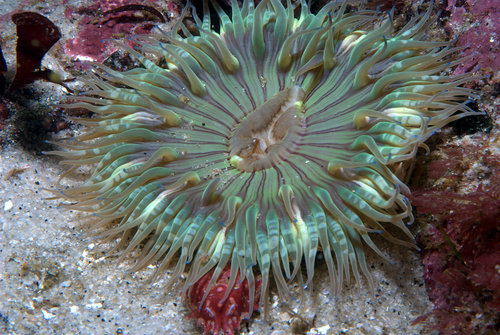
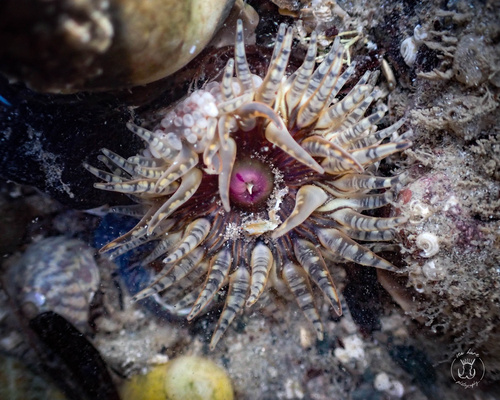
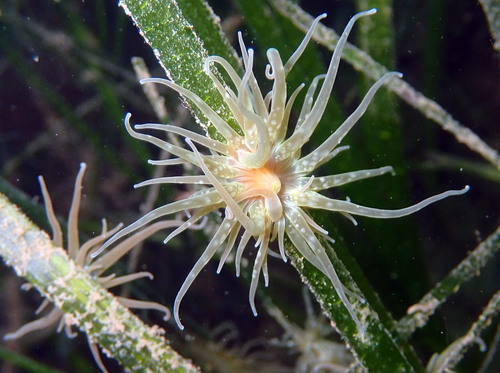
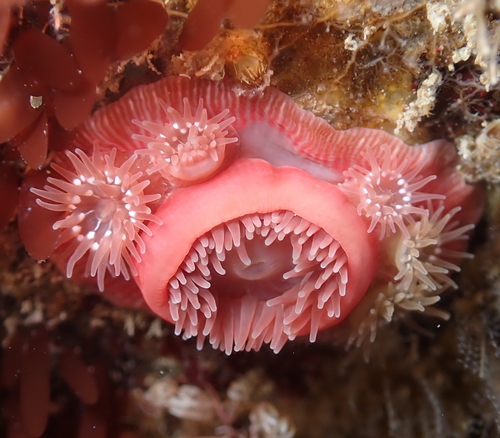
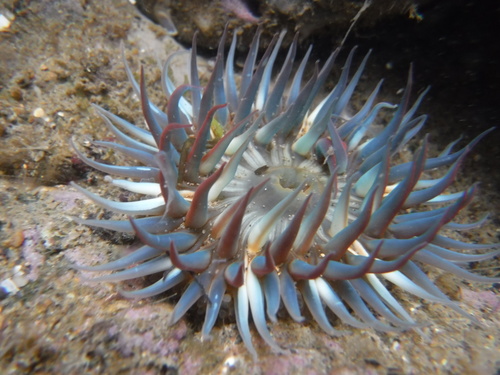
Bunodosoma cavernatum (Bosc, 1802) is a robust sea anemone species. It has a muscular trunk covered in 96 vertical rows of small, rounded, wart-like vesicles. Its oral disc is smooth, and it has approximately 96 tentacles arranged in five cycles. Each tentacle is moderate in length, smooth, and tapering, with inner tentacles longer than the outer ones. At the base of the tentacles are around 48 rounded, lobular projections called acrorhagi, which are armed with stinging cells. The trunk's color varies, and can be any shade of olive green, orange, red, or brown. Tentacles are olive green, pale orange, or reddish, while the oral disc is yellowish-brown, reddish-brown, or olive green, sometimes marked with faint pale radial striping. When fully extended, this sea anemone can grow to 15 mm (0.6 in) in height, and its extended tentacles and oral disc can reach 40 mm (1.6 in) in diameter. Bunodosoma cavernatum is native to the tropical and subtropical western Atlantic Ocean and the Caribbean Sea, with a range that extends from North Carolina to Texas, including Florida and the West Indies. It is found in the lower intertidal zone, growing on rocks, jetties, and other hard substrates that lie under gravelly or sandy bottoms. This species is nocturnal: it expands and spreads its tentacles to feed at night, and contracts into a reddish gelatinous blob during the day. It feeds on small fish and any invertebrates that come into contact with its tentacles. The remains of a scorched mussel (Brachidontes exustus) have been found inside one individual of this species.