About Bunodactis reynaudi (Milne Edwards, 1857)
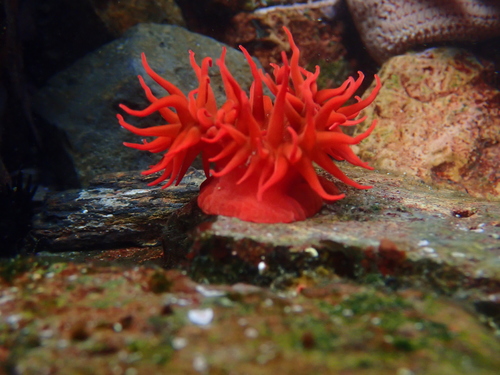
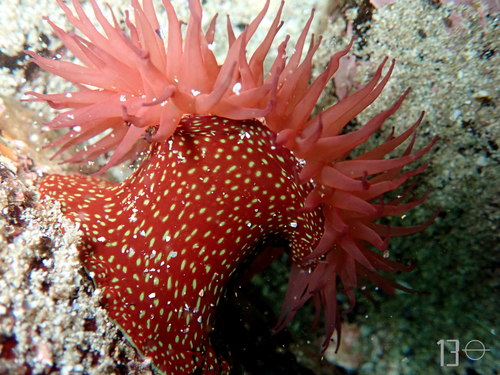
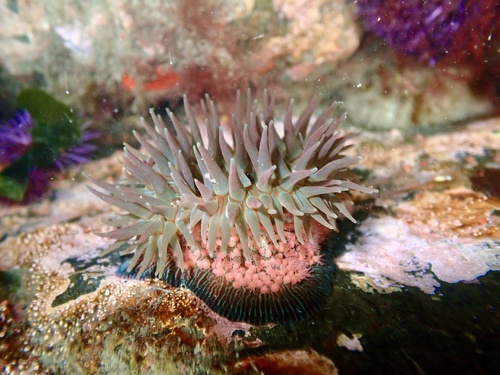
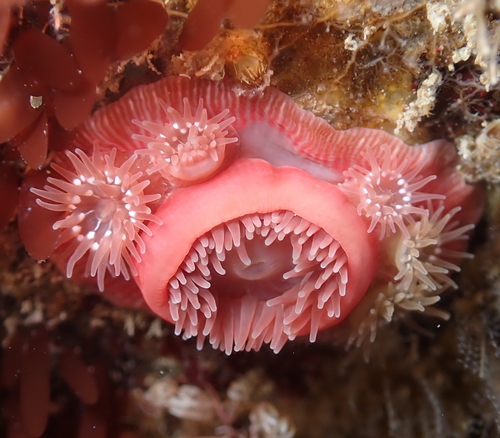
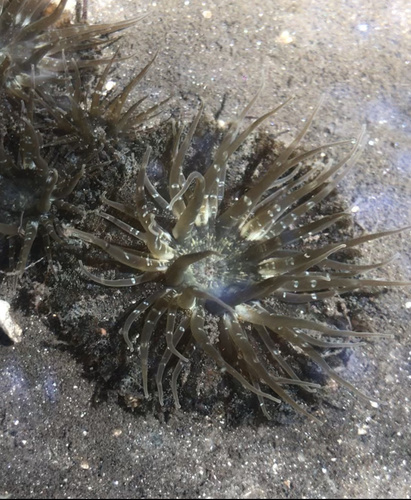
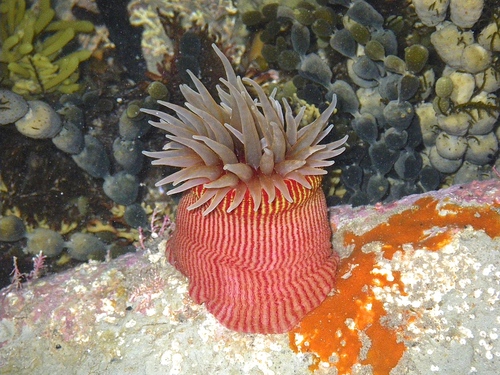
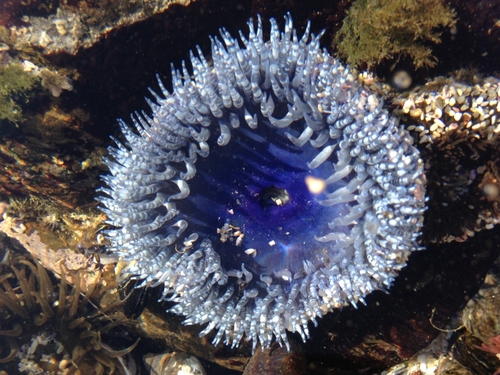
Bunodactis reynaudi, commonly called the sandy anemone, is a medium-sized sea anemone that reaches up to 10 centimeters in diameter. It has more than 300 short tentacles, and its body column is covered in sticky knobs that catch and hold sand and debris particles. This species displays a wide range of body colors, including pink, brown, green, and blue, and often has an oral disc that is a contrasting color. The sandy anemone is found off the coast of Argentina, and along the southern African coast from Luderitz to Durban. It lives in waters from the intertidal zone down to about 4 meters (13.1 feet) deep. It occurs in rock pools on the lower shore, in rock crevices, and often settles in sandy gullies and around the bases of boulders. Juvenile sandy anemones are very commonly found in mussel beds. This species of anemone is often found growing crowded together in small gullies that experience strong wave action. It feeds on mussels, whelks, other molluscs, and urchins. It has an extremely strong contractile sphincter muscle that helps it grip and quickly ingest passing food before the food can be carried away by waves. This anemone grows larger and is particularly abundant in areas with strong wave action, which tears molluscs loose from rocks; the species appears to rely on this wave turbulence to provide it with prey. Unlike typical cnidarians, sea anemones do not have a free-swimming medusal stage in their life cycle. The sandy anemone produces eggs and sperm, and the fertilized egg develops into a planula larva that drifts as part of the plankton before settling on the seabed and developing directly into a juvenile sea anemone.