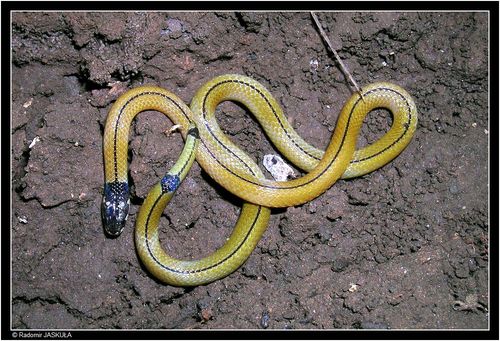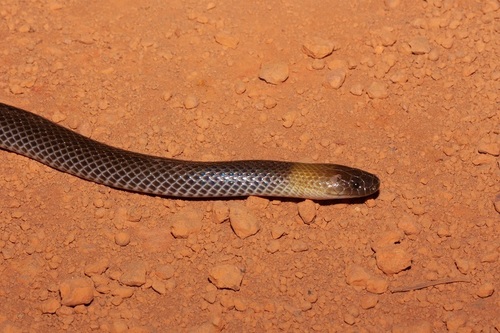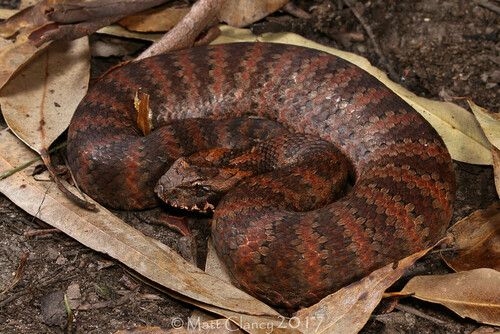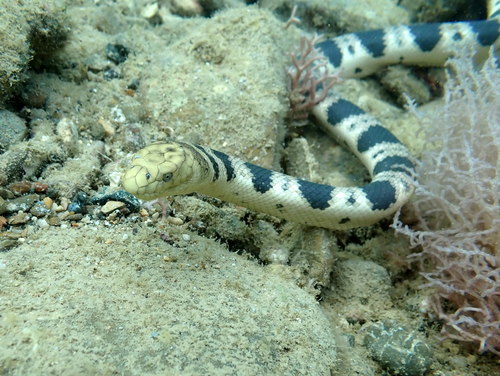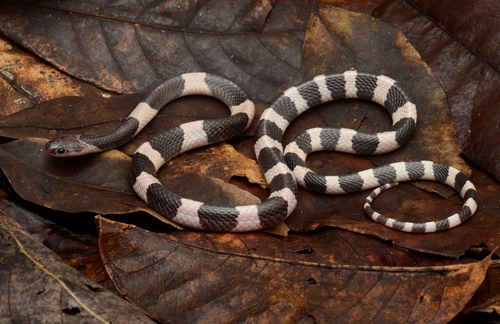
Bungarus candidus (Linnaeus, 1758) is a animal in the Elapidae family, order null, kingdom Animalia. Not known to be toxic.

Photo of Bungarus candidus (Linnaeus, 1758) (Bungarus candidus (Linnaeus, 1758))
🦋 Animalia

Bungarus candidus (Linnaeus, 1758)

Bungarus candidus (Linnaeus, 1758)

Bungarus candidus, the Malayan krait, is a banded snake found in Southeast Asia, with an unbanded black morph reported in Java.

Family
Genus
Bungarus
Order
Class
Squamata

About Bungarus candidus (Linnaeus, 1758)

Bungarus candidus, commonly known as the Malayan krait, can reach a total length of 108 cm (43 in), with a tail measuring 16 cm (6.3 in) long. On its dorsal side, the body and tail have 27 to 34 dark-brown, black, or bluish-black crossbands; these crossbands are narrowed and rounded along the sides. The first crossband is continuous with the dark coloration of the krait's head. The dark crossbands are separated by broad, yellowish-white gaps that may have black spots. On its ventral side, the Malayan krait is uniformly white. An unbanded solid black form also appears in some populations, reportedly in West and Central Java. The smooth dorsal scales are arranged in 15 rows, and the vertebral row of scales is much enlarged. There are 195 to 237 ventrals, the anal plate is undivided, and the single (undivided) subcaudals number between 37 and 56. This species is found in Southeast Asia, ranging from Indochina south to Java and Bali in Indonesia.
Photo: (c) K.L. Chew, some rights reserved (CC BY-NC), uploaded by K.L. Chew · cc-by-nc

Taxonomy

Animalia Chordata Squamata Elapidae Bungarus

More from Elapidae

Sources: GBIF, iNaturalist, Wikipedia, NCBI Taxonomy · Disclaimer

Identify Bungarus candidus (Linnaeus, 1758) instantly — even offline

iNature uses on-device AI to identify plants, animals, fungi and more. No internet needed.

Download iNature — Free

Start Exploring Nature Today

Download iNature for free. 10 identifications on us. No account needed. No credit card required.

Download Free on App Store