About Bulimulus tenuissimus (A.Férussac, 1832)
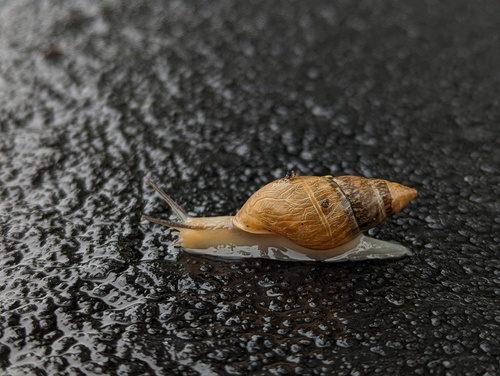
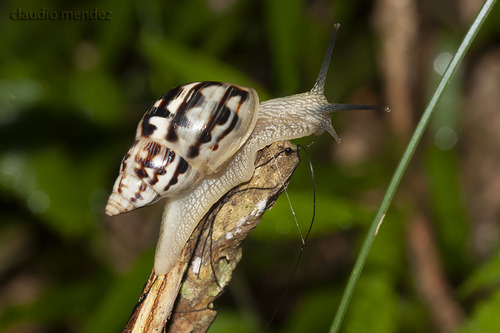
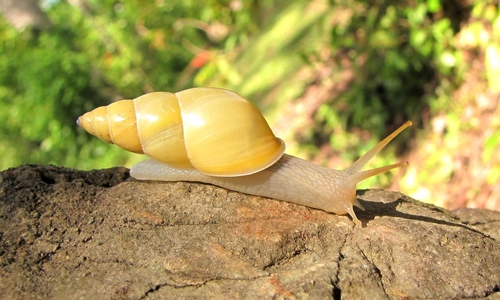
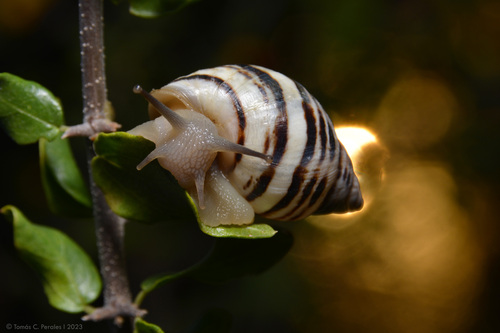
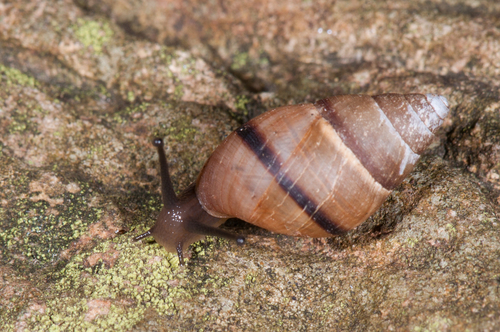
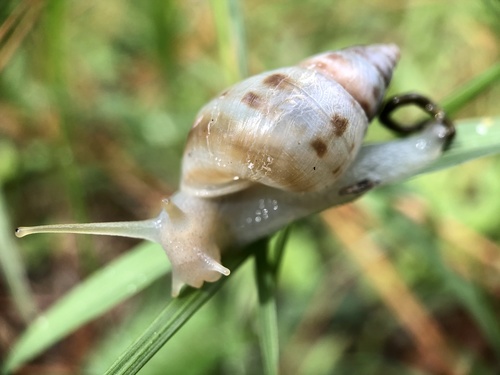
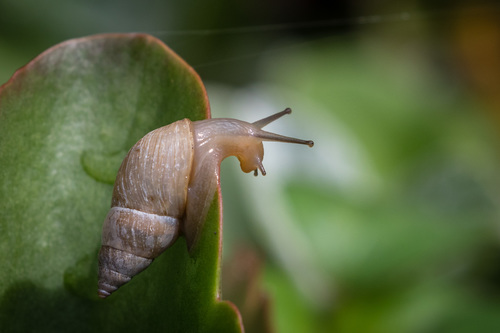
This species is a land snail with the scientific name Bulimulus tenuissimus (A.Férussac, 1832). Its shell is perforate, ovate-conic, very thin, pellucid, and barely glossy. It is marked with faint, closely intercrossing growth striae and fine spiral lines. The shell is pale horn-colored, sometimes taking on a tawny fulvous tone. The spire is conoid, with a rather pointed apex and a simple suture. There are six slightly convex whorls that grow at a moderate rate. The final whorl is convex, does not slope downward at the front, and is somewhat narrowed at the base. The columella is slightly oblique, and sometimes nearly vertical. The aperture is oval, matches the exterior shell color, and makes up half of the total shell length. The peristome is simple, unexpanded, and sharp-edged. The right margin of the peristome curves evenly in a regular arc. The columellar margin curves backward above, almost completely covering the shell's perforation. The shell reaches 9 mm in width, and 17 to 23 mm in height. Bulimulus tenuissimus is native to Brazil, where it is widespread across the country. It has a non-indigenous population in North Carolina, USA. Research by Silva et al. (2008) has documented the reproductive biology of this species. These snails are hermaphrodites, and normally mate to achieve cross-fertilization. Isolated snails are capable of self-fertilization, but this results in lower reproductive success. On average, juvenile snails reach adulthood at 160 days of age, when their shell measures 14-16 mm. After reaching adulthood, snails begin laying eggs. Egg laying activity peaks during the warmer, more humid spring and summer months, but snails produce eggs year-round. In captivity, clutches contain between 1 and 252 eggs. Eggs hatch after approximately 20 days, and over 50% of eggs in a clutch typically hatch. While this snail can live up to 990 days, a relatively long lifespan for the species, egg viability does not decrease as snails age, though older snails produce fewer eggs. Bulimulus tenuissimus acts as a host for trematodes in the genus Postharmostomum, family Brachylaimidae. It is also parasitized by Strongyluris-like larvae, and by the fly Malacophagula neotropica, family Sarcophagidae. A firefly is known to be a predator of this snail species.