About Bulbinella hookeri (Colenso ex Hook.) Mottet
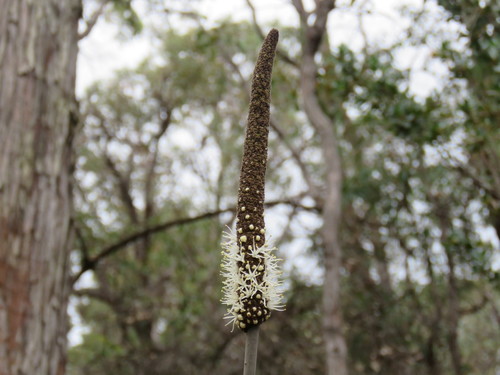
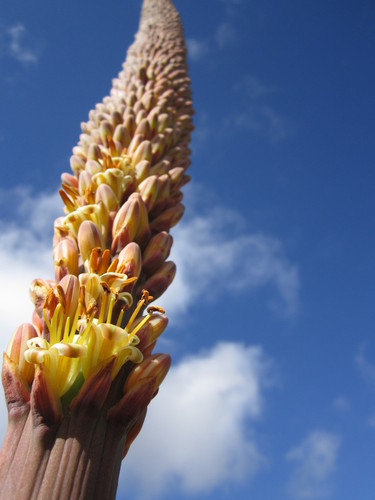
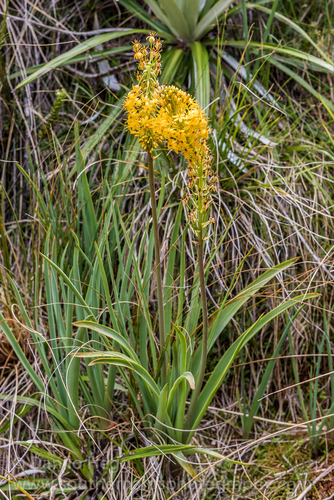
Bulbinella hookeri (Colenso ex Hook.) Mottet is a perennial herb species classified in the family Asphodelaceae, subfamily Asphodeloideae. This species grows up to 120 cm (50 in) in height. It has smooth, narrow, strap-like leaves; the largest recorded leaves for the species measure 75 cm (30 in) in length and 30 cm (10 in) in width. B. hookeri produces bright yellow flowers, and it has tuberous roots. Its peduncles measure 15–50 mm × 2.5–7 mm, its racemes measure 7.5–40 × 1.5–2.3 cm, and its pedicels are most commonly around 1.5 mm long, though they can reach up to 4 mm. The species' capsules measure 7–9 × 4–5.5 mm, its infructescences (fruit clusters) are typically positioned above the leaves, and its seeds are approximately 5–6 mm long. Bulbinella hookeri is endemic to New Zealand, where it can be found across the North Island, South Island, and Stewart Island. On the North Island, it grows on Mount Taranaki, Maungapōhatu, and in part of the north-western Ruahine Range. On the South Island, it occurs in the Canterbury Region, Marlborough Region, and Nelson, reaching as far west as Cobb Valley. The northern edge of this species' range is at Lake Taupō and Mount Taranaki, while its southern limit is roughly at the Waiau Uwha River in Canterbury. In the 2023 New Zealand Threat Classification System assessment, B. hookeri is listed as Not Threatened. Bulbinella species native to New Zealand favor cold habitats and soils with high moisture content. B. hookeri most often grows in mountainous areas, but it is also common at elevations as low as 150 m (500 ft) above sea level. It is frequently found in boggy sites, shaded slopes, seepages, high-rainfall valleys, and other wet locations. It grows primarily in tussock grasslands, and prefers sites with full sun or partial shade. A 2018 study of foraging native bee Lasioglossum sordidum at the Christchurch Botanic Gardens recorded that B. hookeri is occasionally visited by this bee species. B. hookeri is thought to be pollinated by insects including bees and flies, and its seeds are dispersed by wind after development.