About Bufo stejnegeri Schmidt, 1931
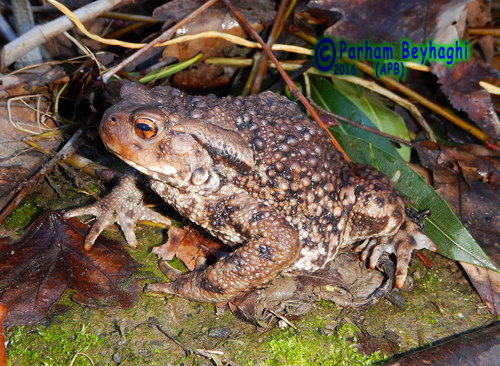
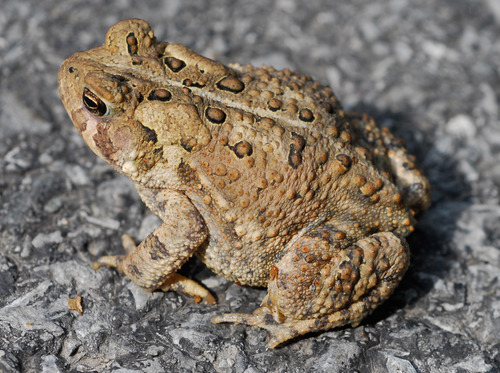
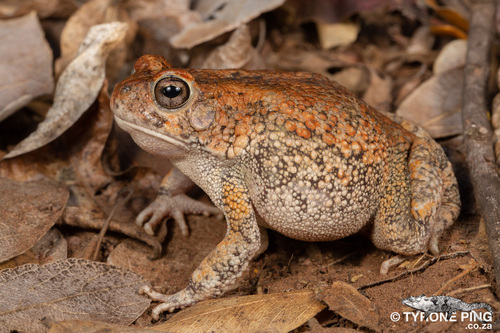
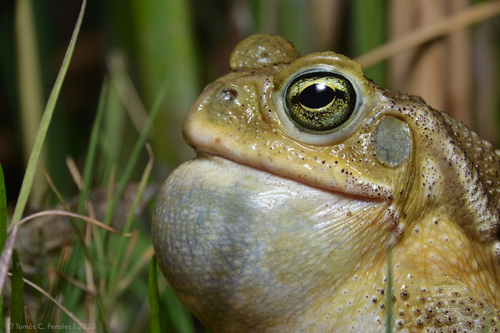
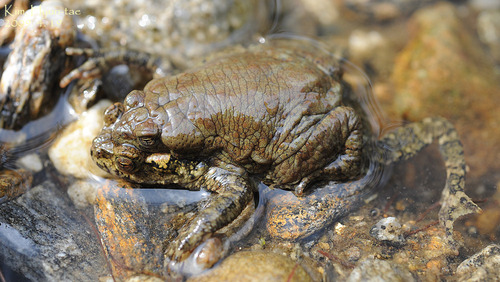
Bufo stejnegeri, commonly known as the Korean water toad, Korean toad, water toad, or Stejneger's toad, is a species of toad that occurs in East Asia. Two separate established populations are recognized: one in eastern Liaoning province of northeastern China, and one in the central mountains of the Korean Peninsula. Within South Korea, this species occurs in eastern Gyeonggi, specifically Gapyeong, and in Gangwon-do, particularly the Odaesan mountain complex. It is suspected that additional populations may exist or have existed in the area between central Korea and Liaoning. A 2006 publication challenged the placement of this species in the genus Bufo, but no alternative classification was suggested, so the species is currently provisionally retained in Bufo. The Korean water toad is an inland species found at elevations ranging from 200 to 700 meters above sea level. As its common name suggests, it prefers habitats associated with water, and is most often found in wooded riparian areas. Breeding and egg-laying occur in the water of streams and rivers. Bufo stejnegeri has distinct behaviors during amplexus and egg-laying that set it apart from other toad species. Its ecology is unusual for a toad, as it is semi-aquatic and breeds in lotic, or moving water, environments. Between November and January, both males and females move into streams and begin amplexus immediately. They remain in amplexus for 3 to 6 months, under the ice of frozen streams, until spawning occurs in spring from March to April. They lay their eggs under rocks in fast-flowing streams. The Korean water toad is typically nocturnal, but it is also active during the day in periods of summer rain. Because their appearance is superficially similar to frogs, Korean water toads are sometimes consumed by humans. However, like other toads, they are poisonous. One case of severe poisoning caused by a digoxin-like immunoreactive substance from this species was reported in 1998.