About Buchanania obovata Engl.
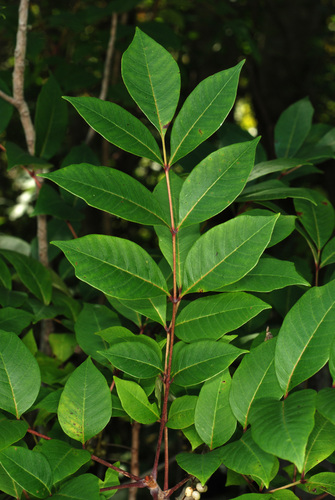
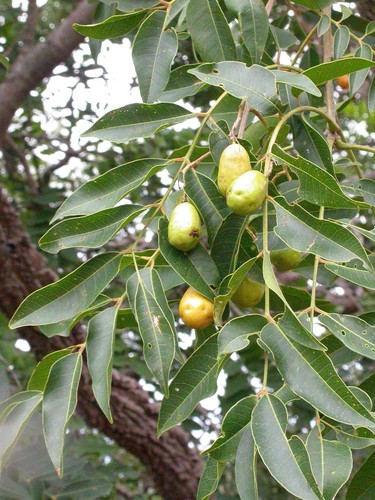
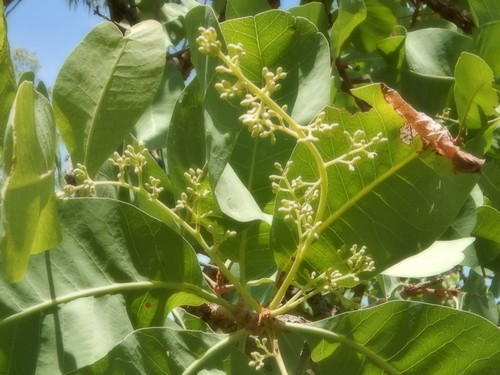
Buchanania obovata Engl. is a small to medium-sized understorey tree that grows in woodlands, native to northern Australia, and is particularly common in Arnhem Land in the Northern Territory. Its common names are green plum and wild mango. This species has smooth, thick, leathery, broadly oblong leaves that measure 5–25 centimetres (2.0–9.8 in) long and 1.5–10 centimetres (0.59–3.94 in) wide. It produces small, cream-coloured flowers that are 0.5 centimetres (0.20 in) across. Its fruit is smooth, fleshy, lens-shaped, and 1–1.7 centimetres (0.39–0.67 in) long. The species was formally described in 1883, using plant material collected from Escape Cliffs in the Northern Territory by C. Hull. The fruit of Buchanania obovata is traditionally eaten by Aboriginal people as a bushfood, and the plant also has traditional medicinal uses. In 2020, researchers at the University of Queensland began researching this fruit. This plum has been eaten for more than 53,000 years, but was previously little-known among non-Indigenous people; scientists learned about the species from people in the remote community of Yirrkala. It is harvested some time after Kakadu plum harvests. Nutritional analysis has found that the fruit contains high levels of protein, dietary fibre, and the minerals potassium, phosphorus and magnesium. Additionally, its folate level is among the highest of all commercially available fruits. Its potential as a commercial crop for Indigenous communities is currently being investigated.