About Buchanania arborescens (Blume) Blume
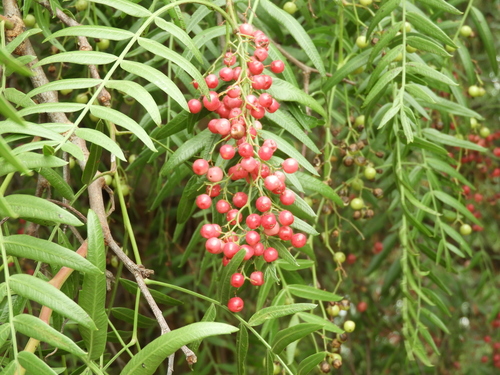
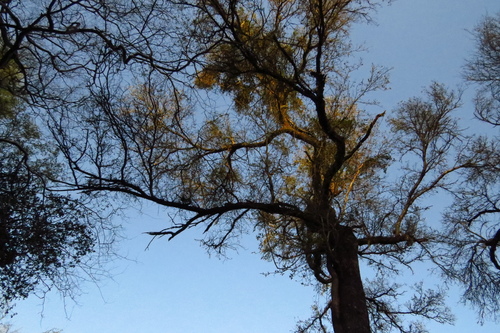
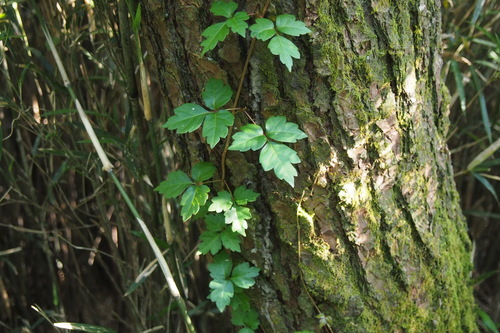
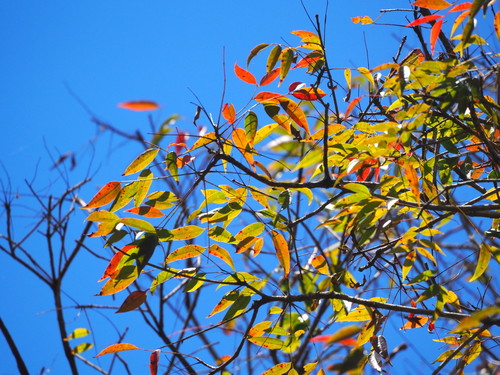
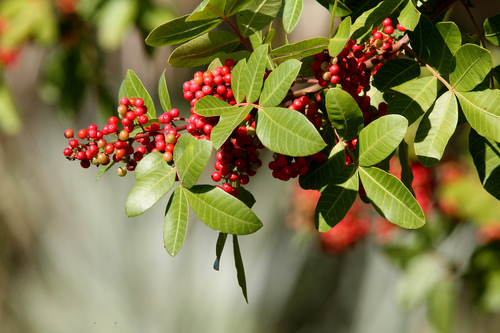
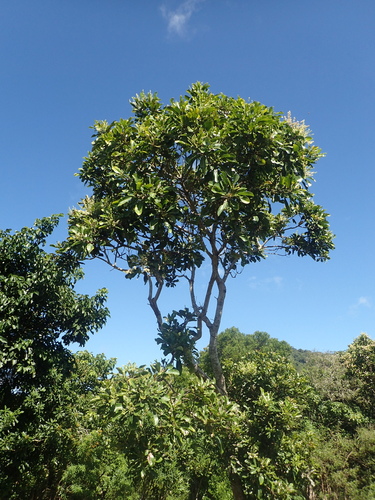
Buchanania arborescens, commonly known as the little gooseberry tree or sparrow's mango, is a small, slender tree native to seasonal tropical forests of northern Australia, Southeast Asia, and the Solomon Islands. Its leaves are spirally arranged, smooth, leathery, and elongated oblong, measuring 5–26 cm long. The flowers are very small and range in color from cream to yellowish white. The edible fruits are globular, small at 1 cm long, and colored reddish to purple-black. Torresian imperial pigeons and other bird species eat these fruits. The species was formally described in 1826 by botanist Carl Ludwig Blume, from plant specimens collected in Java. Blume initially named it Coniogeton arborescens, before transferring the species to the genus Buchanania in 1850. In Australia, the species occurs naturally across the northernmost parts of the continent, from Western Australia through the Northern Territory to Queensland, where it extends down the east coast as far south as Hinchinbrook Island. For uses, Aboriginal people eat the fruit raw. The plant is also used as a traditional medicine in Australia and Malaysia. The 1889 book 'The Useful Native Plants of Australia' records a quote from Leichhardt's Overland journey to Port Essington, p. 479, which reads: "The unripe fruits of this plant were gathered, and, when boiled, imparted an agreeable acidity to the water, and when thus prepared, tasted tolerably well. When ripe, they become sweet and pulpy, like gooseberries, although their rind is not very thick. This resemblance induced us to call the tree 'the little gooseberry tree'".