About Bucephala albeola (Linnaeus, 1758)
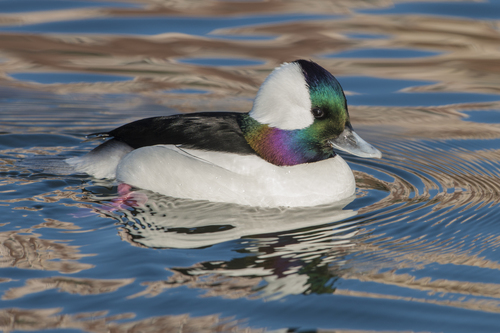
Bucephala albeola, commonly known as the bufflehead, ranges from 32 to 40 cm (13 to 16 inches) in length and weighs 270 to 550 g (9.5 to 19.4 oz), with males (drakes) being larger than females. Its average measurements are 35.5 cm (14.0 inches) in length and 370 g (13 oz) in weight, which makes it comparable in size to the green-winged teal as one of the smallest American ducks. This species has a wingspan of 21.6 inches (55 cm). Adult males have a striking black-and-white plumage, with iridescent green and purple heads and a large white patch behind the eye. Females are grey-toned, with a smaller white patch behind the eye and a light-colored underside. Buffleheads are migratory birds. Most individuals spend the winter in protected coastal waters or open inland waters along the east and west coasts of North America and in the southern United States, and they may also be observed wintering on the Great Lakes. This species is an extremely rare vagrant to western Europe. Its breeding habitat consists of wooded lakes and ponds located in Alaska and Canada, almost entirely within boreal forest or taiga regions. Between 1966 and 2015, bufflehead populations increased by more than 1.5% per year across the species' entire breeding range.