About Bucculatrix frangutella (Goeze, 1783)
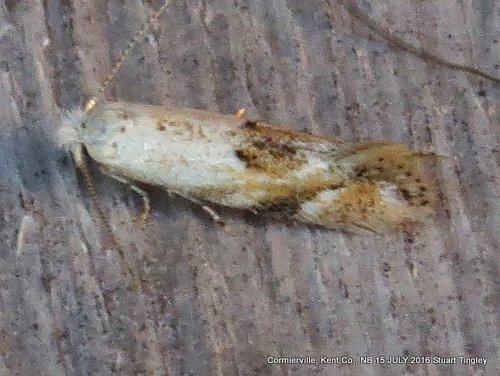
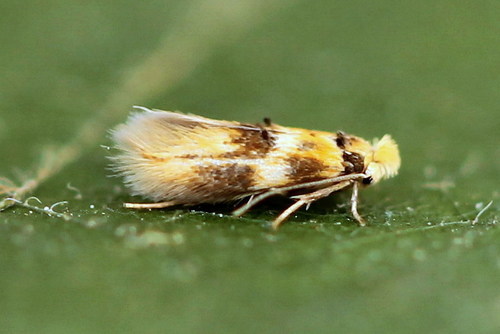
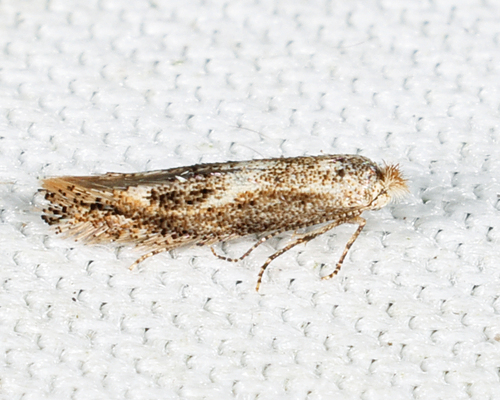
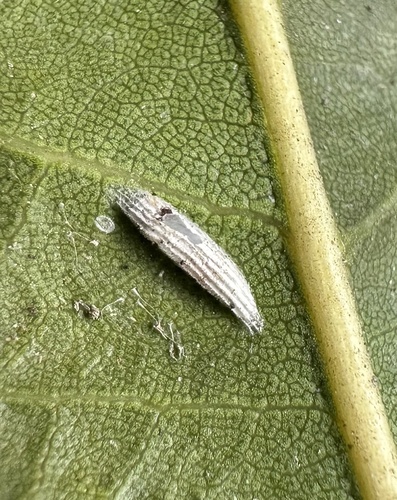
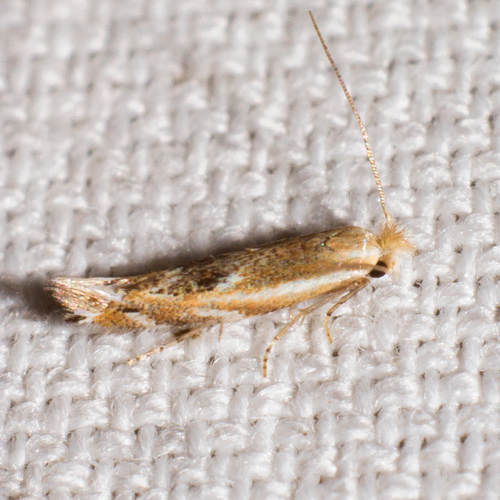
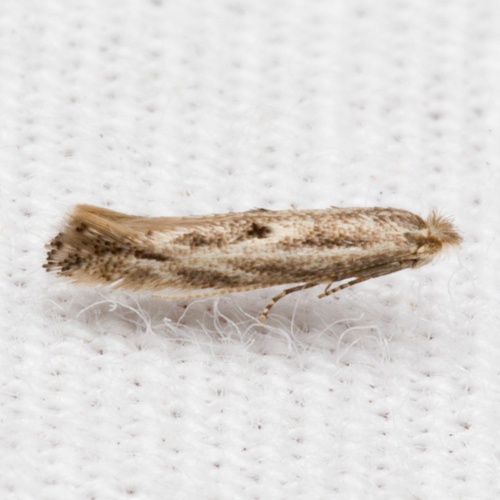
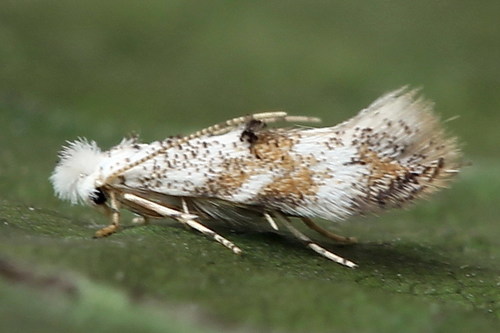
Bucculatrix frangutella is a moth species belonging to the family Bucculatricidae. It was first described by Johann August Ephraim Goeze in 1783, and is found in Europe. This moth has a wingspan of approximately 8 mm. Its head is white, and is sometimes mixed with fuscous coloring in the center. The forewings are white, and may sometimes be sprinkled with varying amounts of fuscous; oblique costal spots located before and beyond the middle of the wing, a third spot at the apex, and a spot on the middle of the dorsum are brownish-ochreous and speckled with dark fuscous. The plical and second discal stigmata are black. The hindwings are grey. Full-grown larvae are pale yellowish-green, with a pinkish tinge on the anterior end; the dorsal line is darker than the surrounding body. The head is pale brown, and the second body segment has brown markings on its upper surface. Adult moths are active on the wing between June and July, with timing varying by location. The larvae feed by mining the leaves of buckthorn plants of the genus Rhamnus. This includes common buckthorn (Rhamnus cathartica) and alder buckthorn (Frangula alnus).